|
001 |
This chapter explains how Oracle maintains consistent data in a
multiuser database environment.
|
本章讲述 Oracle 如何在多用户数据库系统中保证数据一致性(consistent)。
|
|
002 |
This chapter contains the following topics:
|
本章包含以下主题:
|
|
003 |
Introduction to
Data Concurrency and Consistency in a Multiuser Environment
|
13.1
多用户环境下的数据并发访问及数据一致性简介
|
|
004 |
In a single-user database, the user can modify data in the database
without concern for other users modifying the same data at the same
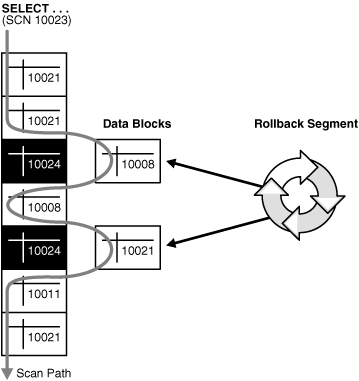
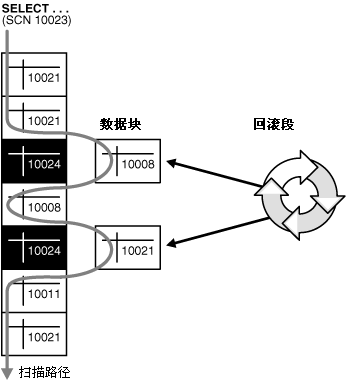
time. However, in a multiuser database, the statements within multiple
simultaneous transactions can update the same data. Transactions
executing at the same time need to produce meaningful and consistent
results. Therefore, control of data concurrency and data consistency is
vital in a multiuser database.
- Data concurrency means that
many users can access data at the same time.
- Data consistency means that
each user sees a consistent view of the data, including visible
changes made by the user's own transactions and transactions of
other users.
|
在只有单一用户的数据库中,用户可以任意修改数据,而无需考虑同时有其他用户正在修改相同的数据。但在一个多用户数据库中,多个并发事务中包含的语句可能
会修改相同的数据。数据库中并发执行的事务最终应产生有意义且具备一致性的结果。因此在多用户数据库中,对数据并发访问(data
concurrency)及数据一致性(data consistency)进行控制是两项极为重要的工作。
- 数据并发访问指多用户同时访问相同的数据。
- 数据一致性指系统中每个用户都能够取得具备一致性的数据,同时还能够看到自己或其他用户所提交的事务对数据的修改。
|
|
005 |
To describe consistent transaction behavior when transactions run at the
same time, database researchers have defined a transaction isolation
model called serializability. The serializable mode of
transaction behavior tries to ensure that transactions run in such a way
that they appear to be executed one at a time, or serially, rather than
concurrently.
|
为了描述同时执行的多个事务如何实现数据一致性,数据库研究人员定义了被称为串行化处理(serializability)的事务隔离模型(transaction
isolation model)。当所有事务都采取串行化的模式执行时,我们可以认为同一时间只有一个事务在运行(串行的),而非并发的。
|
|
006 |
While this degree of isolation between transactions is generally
desirable, running many applications in this mode can seriously
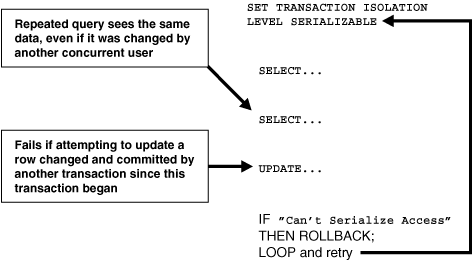
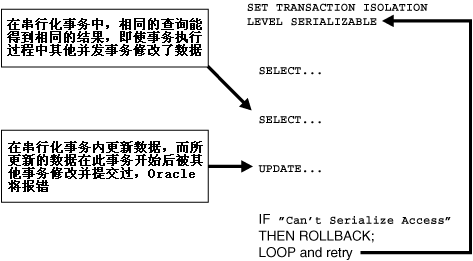
compromise application throughput. Complete isolation of concurrently
running transactions could mean that one transaction cannot perform an
insert into a table being queried by another transaction. In short,
real-world considerations usually require a compromise between perfect
transaction isolation and performance.
|
以串行化模式对事务进行隔离的效果很好,但在此种模式下应用程序的效率将大大降低。将并行执行的事务完全隔离意味着即便当前只存在一个对表进行查询(query)的事务,其他事务
也不能再对此表进行插入(insert)操作了。总之,为了满足实际要求,我们需要在事务的隔离程度与应用的性能之间找出一个平衡点。
|
|
007 |
Oracle offers two isolation levels, providing application developers
with operational modes that preserve consistency and provide high
performance.
|
Oracle 支持两种事务隔离级别(isolation level),使应用程序开发者在对事务进行控制时,既能保证数据的一致性,又能获得良好的性能。
|
|
008 |
See Also:
Chapter 21, "Data Integrity" for information about
data integrity, which enforces business rules associated with a
database
|
另见:
第 21 章,“数据完整性” 了解数据完整性(data
integrity)如何确保数据符合业务规则
|
|
009 |
Preventable Phenomena and Transaction
Isolation Levels
|
13.1.1 需要防止的现象和事务隔离级别
|
|
010 |
The ANSI/ISO SQL standard (SQL92) defines four levels of transaction
isolation with differing degrees of impact on transaction processing
throughput. These isolation levels are defined in terms of three
phenomena that must be prevented between concurrently executing
transactions.
|
ANSI/ISO SQL 标准(SQL92)定义了四种事务隔离级别(transaction isolation
level),这四种隔离级别所能提供的事务处理能力各不相同。这些事务隔离级别是针对三种现象定义的,在并发事务执行时,需要阻止这三种现象
中的一种或多种发生。
|
|
011 |
The three preventable phenomena are:
- Dirty reads: A transaction reads data
that has been written by another transaction that has not been
committed yet.
- Nonrepeatable (fuzzy) reads: A
transaction rereads data it has previously read and finds that
another committed transaction has modified or deleted the data.
- Phantom reads (or phantoms): A
transaction re-runs a query returning a set of rows that satisfies a
search condition and finds that another committed transaction has
inserted additional rows that satisfy the condition.
|
三种需要阻止的现象(preventable phenomena)是:
- 脏读取(dirty
read):一个事务读取了被其他事务写入但还未提交的数据。
- 不可重复读取(nonrepeatable
read):一个事务再次读取其之前曾经读取过的数据时,发现数据已被其他已提交的事务修改或删除。
- 不存在读取(phantom
read):事务按照之前的条件重新查询时,返回的结果集中包含其他已提交事务插入的满足条件的新数据。
|
|
012 |
SQL92 defines four levels of isolation in terms of the phenomena a
transaction running at a particular isolation level is permitted to
experience. They are shown in Table
13-1:
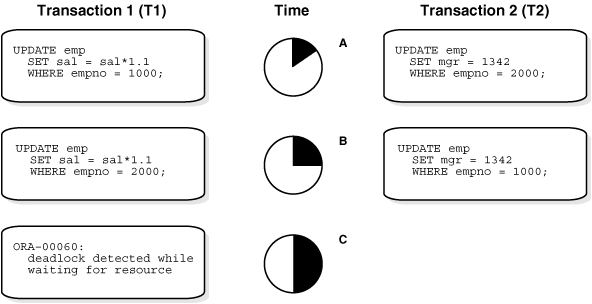
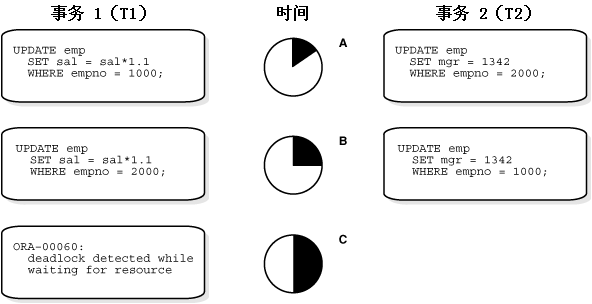
|
SQL92 标准中定义了四个隔离级别,在各隔离级别中,允许发生上述三种需要阻止的现象中的一种或多种。详细情况见表13-1:
|
|
013 |
Table 13-1 Preventable Read
Phenomena by Isolation Level
|
表13-1 各隔离级别中允许出现的需要防止的读取现象
|
|
014 |
|
| Isolation Level |
Dirty Read |
Nonrepeatable Read |
Phantom Read |
|
Read uncommitted
|
Possible |
Possible |
Possible |
Read committed
|
Not possible
|
Possible |
Possible |
Repeatable read
|
Not possible
|
Not possible |
Possible |
Serializable
|
Not possible
|
Not possible |
Not possible |
|
|
|
现象 |
脏读取 |
不可重复读取 |
不存在读取 |
| 隔离级别 |
|
未提交读取(read uncommitted)
|
允许 |
允许 |
允许 |
已提交读取(read committed)
|
不允许
|
允许 |
允许 |
可重复读取(repeatable read)
|
不允许
|
不允许 |
允许 |
串行化(rerializable)
|
不允许
|
不允许 |
不允许 |
|
|
015 |
Oracle offers the read committed and serializable isolation levels, as
well as a read-only mode that is not part of SQL92. Read committed is
the default.
|
Oracle 支持三种事务隔离级别:已提交读取,串行化,以及 SQL92 中没有包含的只读模式(read-only mode)。已提交读取是
Oracle 默认使用的事务隔离级别。
|
|
016 |
See Also:
"How Oracle Manages Data Concurrency and Consistency"
for a full discussion of read committed and serializable isolation
levels
|
另见:
“Oracle 如何管理数据并发访问及数据一致性”详细了解已提交读取及串行化两种事务隔离级别
|
|
017 |
Overview of Locking Mechanisms
|
13.1.2 锁机制概述
|
|
018 |
In general, multiuser databases use some form of data locking to solve
the problems associated with data concurrency, consistency, and
integrity. Locks are mechanisms that prevent destructive
interaction between transactions accessing the same resource.
|
通常,多用户数据库需要利用锁机制解决数据并发访问,数据一致性及完整性问题。锁(lock)是一种防止多个事务访问同一资源时产生破坏性的相互影响的机制。
|
|
019 |
Resources include two general types of objects:
- User objects, such as tables and rows
(structures and data)
- System objects not visible to users,
such as shared data structures in the memory and data dictionary
rows
|
前面提到的资源(resource)大致可以分为两类:
- 用户对象,例如表及数据行(即数据结构及其中的数据)
- 对用户不可见的系统对象,例如内存中的共享数据结构(shared data
structure)数据字典中的信息
|
|
020 |
See Also:
"How Oracle Locks Data" for more information about
locks
|
另见:
“Oracle
如何锁数据”了解更多关于锁的信息
|
|
021 |
How Oracle
Manages Data Concurrency and Consistency
|
13.2 Oracle
如何管理数据并发访问及数据一致性
|
|
022 |
Oracle maintains data consistency in a multiuser environment by using a
multiversion consistency model and various types of locks and
transactions. The following topics are discussed in this section:
|
Oracle 利用多版本一致性模型(multiversion consistency
model),各种类型的锁(lock)及事务(transaction)来管理多用户系统中的数据一致性(data
consistency)。本节讨论以下主题:
|
|
023 |
Multiversion Concurrency Control
|
13.2.1 多版本并发访问控制
|
|
024 |
Oracle automatically provides read consistency to a query so that all
the data that the query sees comes from a single point in time (statement-level
read consistency). Oracle can also provide read consistency to all
of the queries in a transaction (transaction-level read consistency).
|
Oracle 能够自动地实现一个查询的读一致性(read consistency),即一个查询所获得的数据来自同一时间点(single
point in time)(这也被称为语句级读一致性(statement-level
read consistency))。Oracle 还能令一个事务内的所有查询都具备读一致性(即事务级读一致性(transaction-level read consistency))。
|
|
025 |
Oracle uses the information maintained in its rollback segments to
provide these consistent views. The rollback segments contain the old
values of data that have been changed by uncommitted or recently
committed transactions. Figure 13-1
shows how Oracle provides statement-level read consistency using data in
rollback segments.
|
Oracle 利用回滚段(rollback
segment)中的信息生成一个能保证一致性的数据视图。回滚段内保存了未提交或最近提交的事务中所修改数据的原值。图13-1
展示了 Oracle 如何利用回滚段实现语句级的读一致性。
|
|
026 |
Figure 13-1 Transactions and
Read Consistency
|
图13-1 事务及读一致性 |
|
027 |
|
|
|
028 |
As a query enters the execution stage, the current system change number
(SCN) is determined. In Figure 13-1,
this system change number is 10023. As data blocks are read on behalf of
the query, only blocks written with the observed SCN are used. Blocks
with changed data (more recent SCNs) are reconstructed from data in the
rollback segments, and the reconstructed data is returned for the query.
Therefore, each query returns all committed data with respect to the SCN
recorded at the time that query execution began. Changes of other
transactions that occur during a query's execution are not observed,
guaranteeing that consistent data is returned for each query.
|
在查询开始执行时,将记录当前的系统变化编号(system change number,SCN)。在 图13-1
中,记录的系统变化编号为 10023。当查询进行扫描时,只会使用有效的(observed)数据块。如果某个数据块内的数据被修改过(即数据块的
SCN 晚于查询开始执行时记录的 SCN),Oracle
将使用回滚段中的信息重建此数据块,并以重建的数据块替代被修改的数据块供查询使用。因此,查询的结果集只包含查询开始执行时就已经提交的数据。在查询执行时,其他事务修改的数据对此查询来说是无效的,这保证了每个查询都能
得到满足一致性的数据。
|
|
029 |
Statement-Level Read Consistency
|
13.2.2 语句级读一致性
|
|
030 |
Oracle always enforces statement-level read consistency. This
guarantees that all the data returned by a single query comes from a
single point in time—the time that the query began. Therefore, a
query never sees dirty data or any of the changes made by
transactions that commit during query execution. As query execution
proceeds, only data committed before the query began is visible to
the query. The query does not see changes committed after statement
execution begins.
|
Oracle 强制实现语句级读一致性(statement-level read
consistency)。这保证了单一查询的结果集来自一个时间点——即查询开始执行的时间。因此,一个查询的结果集永远不会包含脏数据及此查询执行时其他事务提交的数据。在一个查询执行期间,只有在查询执行前提交的数据对此查询才是可见的。查询无法看到其开始执行后提交的数据。
|
|
031 |
A consistent result set is provided for every query, guaranteeing data
consistency, with no action on the user's part. The SQL statements
SELECT, INSERT
with a subquery, UPDATE, and
DELETE all query data, either explicitly or
implicitly, and all return consistent data. Each of these statements
uses a query to determine which data it will affect (SELECT,
INSERT, UPDATE,
or DELETE, respectively).
|
任何一个查询都能得到满足一致性的结果集,这保证了用户无需额外操作就能确保数据一致性。SELECT,使用子查询的
INSERT,及包含显式或隐式查询的 UPDATE
或
DELETE
语句,都能够保证数据一致性。上述语句通过一个查询(query)来得到她们所需的满足一致性的结果集(分别使用 SELECT,INSERT,UPDATE
或 DELETE 语句)。
|
|
032 |
A SELECT statement is an explicit query and
can have nested queries or a join operation. An
INSERT statement can use nested queries.
UPDATE and DELETE statements can use
WHERE clauses or subqueries to affect only
some rows in a table rather than all rows.
|
SELECT 语句是一个显式地查询,且其中可以包含嵌套查询(nested
query)或连接操作(join operation)。INSERT
语句中也能够使用嵌套查询。UPDATE 及 DELETE
语句能够利用 WHERE 子句或子查询进行限制,只操作数据表内的部分数据行。
|
|
033 |
Queries used in INSERT,
UPDATE, and DELETE
statements are guaranteed a consistent set of results. However, they do
not see the changes made by the DML statement itself. In other words,
the query in these operations sees data as it existed before the
operation began to make changes.
|
INSERT,UPDATE,及 DELETE
语句中包含的查询能够获得一致性的结果集。这些查询无法看到其所在 DML 语句对数据的修改。换句话说,这些查询只能看到其所在 DML
语句开始之前的数据。
|
|
034 |
Note:
If a SELECT list contains a function,
then the database applies statement-level read consistency at the
statement level for SQL run within the PL/SQL function code, rather
than at the parent SQL level. For example, a function could access a
table whose data is changed and committed by another user. For each
execution of the SELECT in the
function, a new read consistent snapshot is established.
|
提示:
如果 SELECT 列表中存在
PL/SQL 函数,那么函数中包含的 SQL 语句将遵从其自身的语句级读一致性,而非其所在 SQL 的读一致性。例如,SELECT
语句中的某个函数访问的表可能会在语句执行时被其他事务修改并提交。此函数每次执行时都将建立一个新的一致性视图(snapshot)。
|
|
035 |
Transaction-Level Read Consistency
|
13.2.3 事务级读一致性
|
|
036 |
Oracle also offers the option of enforcing transaction-level read
consistency. When a transaction runs in serializable mode, all data
accesses reflect the state of the database as of the time the
transaction began. This means that the data seen by all queries within
the same transaction is consistent with respect to a single point in
time, except that queries made by a serializable transaction do see
changes made by the transaction itself. Transaction-level read
consistency produces repeatable reads and does not expose a query to
phantoms.
|
Oracle 还能够实现事务级读一致性(transaction-level read
consistency)。当一个事务运行在串行化模式(serializable
mode)下时,则事务内所有数据访问均反映的是事务开始时的数据状态。即事务内的所有查询对某个时间点来说具备一致性,但是运行在串行化模式下的事务能够看到事务自身对数据所作的修改。事务级的读一致性能够保证可重复读取(repeatable
read)并可阻止出现不存在读取(phantom read)。
|
|
037 |
Read Consistency with Real Application
Clusters
|
13.2.4 RAC 环境下的读一致性
|
|
038 |
Real Application Clusters (RAC) use a cache-to-cache block transfer
mechanism known as Cache Fusion to transfer read-consistent images of
blocks from one instance to another. RAC does this using high speed, low
latency interconnects to satisfy remote requests for data blocks.
|
RAC 系统采用缓存对缓存(cache-to-cache)的数据块传输机制(此技术被称为 Cache
Fusion)在实例间传输满足读一致性(read-consistent)的数据块镜像。RAC
系统通过高速度低延迟的内部连接(interconnect)实现上述数据传输,从而满足实例之间对数据块的请求。
|
|
039 |
See Also:
Oracle Database Oracle Clusterware and Oracle Real Application
Clusters Administration and Deployment Guide
|
另见:
Oracle Database Oracle Clusterware and Oracle Real Application
Clusters Administration and Deployment Guide
|
|
040 |
Oracle Isolation Levels
|
13.2.5 Oracle 事务隔离级别
|
|
041 |
Oracle provides these transaction isolation levels.
|
Oracle 支持以下三种事务隔离级别(transaction isolation level)。
|
|
042 |
|
| Isolation Level |
Description |
|
| Read committed |
This is the default transaction
isolation level. Each query executed by a transaction sees only
data that was committed before the query (not the transaction)
began. An Oracle query never reads dirty (uncommitted) data.
Because Oracle does not prevent other transactions from
modifying the data read by a query, that data can be changed by
other transactions between two executions of the query. Thus, a
transaction that runs a given query twice can experience both
nonrepeatable read and phantoms.
|
| Serializable |
Serializable transactions see only
those changes that were committed at the time the transaction
began, plus those changes made by the transaction itself through
INSERT,
UPDATE, and DELETE
statements. Serializable transactions do not experience
nonrepeatable reads or phantoms.
|
| Read-only |
Read-only transactions see only
those changes that were committed at the time the transaction
began and do not allow INSERT,
UPDATE, and
DELETE statements.
|
|
|
| 隔离级别 |
描述 |
|
| 已提交读取 |
Oracle
默认使用的事务隔离级别。事务内执行的查询只能看到查询执行前(而非事务开始前)就已经提交的数据。Oracle
的查询永远不会读取脏数据(未提交的数据)。
Oracle
不会阻止一个事务修改另一事务中的查询正在访问的数据,因此在一个事务内的两个查询的执行间歇期间,数据有可能被其他事务修改。举例来说,如果一个事务内同一查询执行两次,可能会遇到不可重复读取(nonrepeatable
read)或不存在读取(phantom)的现象。
|
| 串行化 |
串行化隔离的事务只能看到事务执行前就已经提交的数据,以及事务内
INSERT,UPDATE,及 DELETE
语句对数据的修改。串行化隔离的事务不会出现不可重复读取或不存在读取的现象。
|
| 只读模式 |
只读事务只能看到事务执行前就已经提交的数据,且事务中不能执行
INSERT,UPDATE,及 DELETE
语句。
|
|
|
043 |
Set the Isolation Level
|
13.2.5.1 设置隔离级别
|
|
044 |
Application designers, application developers, and database
administrators can choose appropriate isolation levels for different
transactions, depending on the application and workload. You can set the
isolation level of a transaction by using one of these statements at the
beginning of a transaction:
|
应用程序的设计开发者及数据库管理员可以依据应用程序的需求及系统负载(workload)而为不同的事务选择不同的隔离级别(isolation
level)。用户可以在事务开始时使用以下语句设定事务的隔离级别:
|
|
045 |
SET TRANSACTION ISOLATION LEVEL READ COMMITTED;
SET TRANSACTION ISOLATION LEVEL SERIALIZABLE;
SET TRANSACTION READ ONLY;
|
SET TRANSACTION ISOLATION LEVEL READ COMMITTED;
SET TRANSACTION ISOLATION LEVEL SERIALIZABLE;
SET TRANSACTION READ ONLY;
|
|
046 |
To save the networking and processing cost of beginning each transaction
with a SET TRANSACTION statement, you can
use the ALTER SESSION statement to set the
transaction isolation level for all subsequent transactions:
|
如果在每个事务开始时都使用 SET TRANSACTION
语句,将加重网络及处理器的负担。用户可以使用 ALTER SESSION
语句改变一个会话所有内事务的默认隔离级别:
|
|
047 |
ALTER SESSION SET ISOLATION_LEVEL SERIALIZABLE;
ALTER SESSION SET ISOLATION_LEVEL READ COMMITTED;
|
ALTER SESSION SET ISOLATION_LEVEL SERIALIZABLE;
ALTER SESSION SET ISOLATION_LEVEL READ COMMITTED;
|
|
048 |
See Also:
Oracle Database SQL Reference for detailed information on any of
these SQL statements
|
另见:
Oracle Database SQL Reference
了解关于上述 SQL 语句的详细信息
|
|
049 |
Read Committed Isolation
|
13.2.5.2 已提交读取隔离
|
|
050 |
The default isolation level for Oracle is read committed. This degree of
isolation is appropriate for environments where few transactions are
likely to conflict. Oracle causes each query to run with respect to its
own materialized view time, thereby permitting nonrepeatable reads and
phantoms for multiple executions of a query, but providing higher
potential throughput. Read committed isolation is the appropriate level
of isolation for environments where few transactions are likely to
conflict.
|
Oracle 默认使用的隔离级别(isolation level)是已提交读取(read
committed)隔离。这种程度的隔离适合在事务发生冲突的可能性较小的系统中使用。在这种隔离级别下,Oracle
能够保证事务内每个查询在执行期间都拥有一个唯一的数据视图,因此事务可能出现不可重复读取(nonrepeatable
read)或不存在读取(phantom)的现象,但此时系统的数据处理能力较高。因此已提交读取隔离(read committed
isolation)适合在事务发生冲突的可能性较小的系统中使用。
|
|
051 |
Serializable Isolation
|
13.2.5.3 串行化隔离
|
|
052 |
Serializable isolation is suitable for environments:
- With large databases and short
transactions that update only a few rows
- Where the chance that two concurrent
transactions will modify the same rows is relatively low
- Where relatively long-running
transactions are primarily read only
|
符合以下特性的系统适合采用串行化隔离(serializable isolation):
- 数据量大,但事务短小,只会更新较少数据行的数据库
- 两个并发事务修改相同数据的概率较小
- 运行时间相对较长的事务只执行只读操作
|
|
053 |
Serializable isolation permits concurrent transactions to make only
those database changes they could have made if the transactions had been
scheduled to run one after another. Specifically, Oracle permits a
serializable transaction to modify a data row only if it can determine
that prior changes to the row were made by transactions that had
committed when the serializable transaction began.
|
在串行化隔离下,并发事务对数据库进行修改时只能顺序执行。具体来说,在串行化隔离下,Oracle
在允许一个采用串行化隔离的事务修改某些数据行时,需要判断在此事务开始执行之前,其他所有事务对这些数据行的修改已经被提交。
|
|
054 |
To make this determination efficiently, Oracle uses control information
stored in the data block that indicates which rows in the block contain
committed and uncommitted changes. In a sense, the block contains a
recent history of transactions that affected each row in the block. The
amount of history that is retained is controlled by the
INITRANS parameter of
CREATE TABLE and ALTER TABLE.
|
为了实现上述判断,Oracle 在数据块(data
block)内存储了相关的控制信息,用于记录此块内数据行中所包含的数据是已提交或未提交的。即数据块内记录了近期对本数据块内数据行进行了修改的所有事务及事务的状态。在一个数据块内能够保留多少这样的记录是由
CREATE TABLE 或 ALTER TABLE 语句中的
INITRANS 参数设定的。
|
|
055 |
Under some circumstances, Oracle can have insufficient history
information to determine whether a row has been updated by a too recent
transaction. This can occur when many transactions concurrently modify
the same data block, or do so in a very short period. You can avoid this
situation by setting higher values of INITRANS
for tables that will experience many transactions updating the same
blocks. Doing so enables Oracle to allocate sufficient storage in each
block to record the history of recent transactions that accessed the
block.
|
有些情况下,Oracle
无法获得足够的历史信息来判断某个数据行是否被一个事务修改过。当大量事务在短时间内并发地修改同一数据块就会出现以上情况。用户可以为可能被多个事务同时更新相同数据块的表设置较大的 INITRANS
值,以便避免上述情况。设置了较大的 INITRANS
值后,Oracle 就能为每个数据块分配足够的空间来记录访问此数据块的事务的信息。
|
|
056 |
Oracle generates an error when a serializable transaction tries to
update or delete data modified by a transaction that commits after the
serializable transaction began:
|
当一个串行化事务试图更新或删除数据,而这些数据在此事务开始后被其他事务修改并进行了提交,Oracle 将报错:
|
|
057 |
ORA-08177: Cannot serialize access for this transaction
|
ORA-08177: 无法进行串行化访问
|
|
058 |
When a serializable transaction fails with the
Cannot serialize access error, the application can take any of
several actions:
- Commit the work executed to that point
- Execute additional (but different)
statements (perhaps after rolling back to a savepoint established
earlier in the transaction)
- Undo the entire transaction
|
当一个串行化事务因为无法进行串行化访问(Cannot serialize access)错误而失败时,应用程序可以
选择以下几种处理方式:
- 将错误发生之前的操作提交
- 执行其他操作(执行前可以回滚到事务内的某个保存点)
- 撤销整个事务
|
|
059 |
Figure 13-2 shows an example of
an application that rolls back and retries the transaction after it
fails with the Cannot serialize access
error:
|
图13-2 显示了一个事务遇到无法进行串行化访问后,
程序进行回滚并尝试重新执行此事务的例子:
|
|
060 |
Figure 13-2 Serializable
Transaction Failure
|
图13-2 串行化事务失败
|
|
061 |
|
 |
|
062 |
Figure 13-2 shows a serializable transaction
consisting of a SELECT query that is repeated, followed by an UPDATE
query. The second SELECT query sees the same data as the first, even
though between the two SELECT queries someone else has changed the
data. The UPDATE query fails if attempting to update a row changed
and committed by another transaction since this transaction began.
The "Cannot Serialize Access" error causes the transaction to roll
back to the beginning and retry.
|
图13-2 显示了一个串行化事务,其中首先执行了两个相同的 SELECT 语句,接着执行了一个
UPDATE 语句。即便在两个 SELECT 执行之间有其他事务修改了相关数据,这两个 SELECT 也能够返回相同的结果。当
UPDATE 语句更新数据时,所更新的数据在此事务开始后被其他事务修改并提交过,Oracle 将报错 Cannot Serialize
Access。这个错误将导致事务回滚并尝试重新执行。
|
|
063 |
Comparison of Read Committed and Serializable
Isolation
|
13.2.6 已提交读取隔离与串行化隔离的区别
|
|
064 |
Oracle gives the application developer a choice of two transaction
isolation levels with different characteristics. Both the read committed
and serializable isolation levels provide a high degree of consistency
and concurrency. Both levels provide the contention-reducing benefits of
Oracle's read consistency multiversion concurrency control model and
exclusive row-level locking implementation and are designed for
real-world application deployment.
|
Oracle 为应用程序开发者提供了两种特性相异的事务隔离级别。已提交读取(read
committed)隔离和串行化(serializable)隔离都能实现高度的数据一致性及并发访问能力。这两种隔离级别都能够利用 Oracle
的读一致性多版本并发访问控制模型及独有的行级锁(row-level
locking)技术,从而减少并发事务间的竞争。应用程序开发者可以使用这两种隔离级别开发符合现实要求的应用系统。
|
|
065 |
Transaction Set Consistency
|
13.2.6.1 事务集数据一致性
|
|
066 |
A useful way to view the read committed and serializable isolation
levels in Oracle is to consider the following scenario: Assume you have
a collection of database tables (or any set of data), a particular
sequence of reads of rows in those tables, and the set of transactions
committed at any particular time. An operation (a query or a
transaction) is transaction set consistent if all its reads
return data written by the same set of committed transactions. An
operation is not transaction set consistent if some reads reflect the
changes of one set of transactions and other reads reflect changes made
by other transactions. An operation that is not transaction set
consistent in effect sees the database in a state that reflects no
single set of committed transactions.
|
我们可以参考以下场景来研究 Oracle
中的两种隔离级别:假设现有一组数据库表(或称为一组数据集),一系列读取表数据的查询,以及一组在任意时间提交的事务。如果一个数据库操作(一个查询或一个事务)中所有读取返回的数据是由同一组已提交事务写入的,我们就称此操作满足事务集数据一致性(transaction set consistent)。相反,当一个数据库操作内的不同读取反映了不同事务集对数据的修改,此操作就不满足事务集数据一致性。换句话说,一个不满足事务集数据一致性的操作所看到的数据库的状态是由不同的已提交事务集决定的。
|
|
067 |
Oracle provides transactions executing in read committed mode with
transaction set consistency for each statement. Serializable mode
provides transaction set consistency for each transaction.
|
在已提交读取(read committed)隔离模式下,Oracle
能保证每个语句的事务集数据一致性。而在串行化(serializable)隔离模式下,Oracle 能保证每个事务的事务集数据一致性。
|
|
068 |
Table 13-2 summarizes key
differences between read committed and serializable transactions in
Oracle.
|
表13-2
总结了 Oracle 中已提交读取事务和串行化事务的关键区别。
|
|
069 |
Table 13-2 Read Committed
and Serializable Transactions
|
表13-2 已提交读取事务和串行化事务
|
|
070 |
|
| |
Read Committed |
Serializable |
|
Dirty write
|
Not possible
|
Not possible
|
Dirty read
|
Not possible
|
Not possible
|
Nonrepeatable read
|
Possible
|
Not possible
|
Phantoms
|
Possible
|
Not possible
|
Compliant with ANSI/ISO SQL 92
|
Yes
|
Yes
|
Read materialized view time
|
Statement
|
Transaction
|
Transaction set consistency
|
Statement level
|
Transaction level
|
Row-level locking
|
Yes
|
Yes
|
Readers block writers
|
No
|
No
|
Writers block readers
|
No
|
No
|
Different-row writers block writers
|
No
|
No
|
Same-row writers block writers
|
Yes
|
Yes
|
Waits for blocking transaction
|
Yes
|
Yes
|
Subject to cannot serialize access
|
No
|
Yes
|
Error after blocking transaction
terminates
|
No
|
No
|
Error after blocking transaction
commits
|
No
|
Yes
|
|
|
| |
已提交读取
|
串行化
|
|
脏写入(dirty write)
|
不可能
|
不可能
|
脏读取(dirty read)
|
不可能
|
不可能
|
不可重复读取(nonrepeatable read)
|
可能
|
不可能
|
不存在读取(phantom)
|
可能
|
不可能
|
与 ANSI/ISO SQL 92 标准兼容
|
是
|
是
|
唯一的数据视图的使用范围
|
语句
|
事务
|
事务集数据一致性
|
语句级
|
事务级
|
行级锁
|
是
|
是
|
读操作(reader)阻塞写操作(writer)
|
否
|
否
|
写操作阻塞读操作
|
否
|
否
|
针对不同数据行的写操作
是否相互阻塞
|
否
|
否
|
针对相同数据行的写操作
是否相互阻塞
|
是
|
是
|
等待导致阻塞的事务(blocking transaction)
|
是
|
是
|
会出现无法进行串行化访问(Cannot
serialize access)错误
|
否
|
是
|
在导致阻塞的事务结束后
将发生错误
|
否
|
否
|
在导致阻塞的事务提交后
将发生错误
|
否
|
是
|
[参考 051-062,尤其是 056,关于串行化隔离的特点;而与阻塞相关的条目可以参考
13.2.6.2 关于行级锁的介绍。]
|
|
071 |
Row-Level Locking
|
13.2.6.2 行级锁
|
|
072 |
Both read committed and serializable transactions use row-level locking,
and both will wait if they try to change a row updated by an uncommitted
concurrent transaction. The second transaction that tries to update a
given row waits for the other transaction to commit or undo and release
its lock. If that other transaction rolls back, the waiting transaction,
regardless of its isolation mode, can proceed to change the previously
locked row as if the other transaction had not existed.
|
在已提交读取隔离模式(read committed)及串行化隔离模式(serializable)下执行的事务都采用行级锁(row-level
locking)技术,他们在更新被未提交的并发事务修改的数据行时都会发生等待--等待未提交的并发事务提交或撤销,并释放锁。如果未提交的并发事务进行了回滚,那么无论发生等待的事务运行在何种隔离模式下,都能修改之前被锁住的数据行,如同未提交的并发事务不存在一样。
|
|
073 |
However, if the other blocking transaction commits and releases its
locks, a read committed transaction proceeds with its intended update. A
serializable transaction, however, fails with the error
Cannot serialize access error, because the
other transaction has committed a change that was made since the
serializable transaction began.
|
当导致阻塞的事务(blocking transaction)[前文中提到的未提交的并发事务]提交并释放了锁后,运行在已提交读写模式下的等待事务就能够继续执行其中的更新操作。而运行在串行化模式下的等待事务将出现无法进行串行化访问(Cannot serialize access)错误,因为阻塞事务在串行化等待事务开始后更新了后者所存取的数据。
|
|
074 |
Referential Integrity
|
13.2.6.3 引用完整性
|
|
075 |
Because Oracle does not use read locks in either read-consistent or
serializable transactions, data read by one transaction can be
overwritten by another. Transactions that perform database
consistency checks at the application level cannot assume that the
data they read will remain unchanged during the execution of the
transaction even though such changes are not visible to the
transaction. Database inconsistencies can result unless such
application-level consistency checks are coded with this in mind,
even when using serializable transactions.
|
无论在已提交读取隔离模式(read committed)还是串行化隔离模式(serializable)中,Oracle 都不会使用读取锁,即某一个事务读取的数据可能会被其他事务更新。在应用
级(application
level)进行数据库一致性检查的事务无法确定在其执行期间所读取的数据是否同时已被修改,因为所有修改对此事务来说是透明的。如果应用程序的代码逻辑
需要进行应用级的一致性检查,即便采用串行化事务(serializable
transaction),也不能避免数据不一致的问题。
|
|
076 |
See Also:
Oracle Database Application Developer's Guide - Fundamentals for
more information about referential integrity and serializable
transactions
|
另见:
Oracle Database Application Developer's Guide - Fundamentals
了解关于引用完整性和串行化事务的详细信息
|
|
077 |
Note:
You can use both read committed and serializable transaction
isolation levels with Real Application Clusters.
|
Note:
在 RAC 环境中,用户也可以选择已提交读取或串行化两种事务隔离级别。
|
|
078 |
Distributed Transactions
|
13.2.6.4 分布式事务
|
|
079 |
In a distributed database environment, a given transaction updates data
in multiple physical databases protected by two-phase commit to ensure
all nodes or none commit. In such an environment, all servers, whether
Oracle or non-Oracle, that participate in a serializable transaction are
required to support serializable isolation mode.
|
在分布式数据库系统中,一个更新多个物理数据库中数据的事务将采用两步提交机制(two-phase
commit)以保证事务在所有节点上全部提交或全部回滚。在分布式数据库系统中,一个采用串行化隔离(serializable)的事务所涉及的所有 Oracle 及非
Oracle 数据库都必须支持串行化隔离模式。
|
|
080 |
If a serializable transaction tries to update data in a database managed
by a server that does not support serializable transactions, the
transaction receives an error. The transaction can undo and retry only
when the remote server does support serializable transactions.
|
当一个串行化事务试图在不支持串行化隔离模式的数据库中更新数据时,此事务将发生错误。只有远程数据库支持串行化隔离模式时,事务发生错误后才能撤销并重试。
|
|
081 |
In contrast, read committed transactions can perform distributed
transactions with servers that do not support serializable transactions.
|
与串行化隔离模式相反,采用已提交读取隔离模式(read committed)的事务在不支持串行化隔离模式的数据库中执行分布式事务。
|
|
082 |
See Also:
Oracle Database Administrator's Guide
|
另见:
Oracle Database Administrator's Guide
|
|
083 |
Choice of Isolation Level
|
13.2.7 选择事务隔离级别
|
|
084 |
Application designers and developers should choose an isolation level
based on application performance and consistency needs as well as
application coding requirements.
|
应用程序的设计、开发者应当根据应用程序的性能要求,数据一致性要求,以及应用程序的编码需求来决定选择何种隔离级别(isolation level)。
|
|
085 |
For environments with many concurrent users rapidly submitting
transactions, designers must assess transaction performance requirements
in terms of the expected transaction arrival rate and response time
demands. Frequently, for high-performance environments, the choice of
isolation levels involves a trade-off between consistency and
concurrency.
|
对于存在大量并发用户快速地提交事务的系统来说,应用程序设计者应该从事务处理量及响应时间的角度评估事务处理的性能。通常来说,为一个对性能要求高的系统选择事务隔离级别时,需要在数据一致性及数据并发处理间进行平衡。
|
|
086 |
Application logic that checks database consistency must take into
account the fact that reads do not block writes in either mode.
|
在应用层对数据库一致性进行检查的应用逻辑必须注意,在两种隔离模式下读操作都不会阻塞写操作。
|
|
087 |
Oracle isolation modes provide high levels of consistency, concurrency,
and performance through the combination of row-level locking and
Oracle's multiversion concurrency control system. Readers and writers do
not block one another in Oracle. Therefore, while queries still see
consistent data, both read committed and serializable isolation provide
a high level of concurrency for high performance, without the need for
reading uncommitted data.
|
在 Oracle 行级锁(row-level locking)及 Oracle
多版本并发访问控制系统(multiversion concurrency control
system)的基础上,Oracle 的两种事务隔离模式能够实现高一致性,高并发性及高性能。在 Oracle 系统中,读写操作不会相互阻塞。因此,已提交读取(read
committed)和串行化(serializable)两种隔离模式都能提供高度的并发访问能力,从而保证系统的高性能,同时查询无需读取未提交的数据
。
|
|
088 |
Read Committed Isolation
|
13.2.7.1 已提交读取隔离
|
|
089 |
For many applications, read committed is the most appropriate isolation
level. Read committed isolation can provide considerably more
concurrency with a somewhat increased risk of inconsistent results due
to phantoms and non-repeatable reads for some transactions.
|
对于大多数应用来说,已提交读取隔离(read
committed)是最适合的事务隔离级别。已提交读取隔离能够最大限度地保证数据并发性,但在某些事务中可能会出现不可重复读取(non-repeatable
read)或不存在读取(phantom),因此略微增加了出现数据不一致性的风险。
|
|
090 |
Many high-performance environments with high
transaction arrival rates
require more throughput and faster response times than can be achieved
with serializable isolation. Other environments that supports users with
a very low transaction arrival rate also face very low risk of incorrect
results due to phantoms and nonrepeatable reads. Read committed
isolation is suitable for both of these environments.
|
在对性能要求较高的系统中,为了应对较高的事务到来率(transaction arrival
rate),系统需要提供更大的事务吞吐量和更快的响应速度,此时采用串行化隔离可能难以实现。还有一类系统,其事务到来率较低,出现不可重复读取或不存在读取的风险也较低。以上两种系统均适合采用已提交读取隔离
。
|
|
091 |
Oracle read committed isolation provides transaction set consistency for
every query. That is, every query sees data in a consistent state.
Therefore, read committed isolation will suffice for many applications
that might require a higher degree of isolation if run on other database
management systems that do not use multiversion concurrency control.
|
Oracle 的已提交读取隔离能够确保所有查询的事务集数据一致性(transaction set
consistent)。即查询获得的数据是处于一致性状态下的。因此在 Oracle
中已提交读取隔离能够满足大多数应用的要求。而在没有多版本并发访问控制的数据库管理系统中,开发者可能需要采用更高程度的隔离方式。
|
|
092 |
Read committed isolation mode does not require application logic to trap
the Cannot serialize access error and loop
back to restart a transaction. In most applications, few transactions
have a functional need to issue the same query twice, so for many
applications protection against phantoms and non-repeatable reads is not
important. Therefore many developers choose read committed to avoid the
need to write such error checking and retry code in each transaction.
|
在已提交读取隔离模式下,开发者不需要在应用逻辑中捕获无法进行串行化访问(Cannot
serialize
access)错误,也无需回滚并重新执行事务。在大多数应用程序中,几乎不会有在一个事务中执行同一查询多次的情况,因此在这些应用程序中,为防止出现不可重复读取或不存在读取而采取的保护措施并不重要。
如果开发者选择已提交读取隔离,就能够省略在每个事务中加入错误检查及事务重做的代码。
|
|
093 |
Serializable Isolation
|
13.2.7.2 串行化隔离
|
|
094 |
Oracle's serializable isolation is suitable for environments where there
is a relatively low chance that two concurrent transactions will modify
the same rows and the long-running transactions are primarily read only.
It is most suitable for environments with large databases and short
transactions that update only a few rows.
|
Oracle 的串行化隔离(serializable
isolation)适合于具备以下特点的系统:出现修改相同数据的事务的几率较小,且长时间执行的事务以只读操作为主。最适合采用串行化隔离的系统是大型数据库,且其中主要运行更新少量数据的短小事务。
|
|
095 |
Serializable isolation mode provides somewhat more consistency by
protecting against phantoms and nonrepeatable reads and can be important
where a read/write transaction runs a query more than once.
|
串行化隔离能够提供更好的数据一致性,她能阻止不可重复读取(nonrepeatable
read)或不存在读取(phantom)的现象。当一个读或写事务中需要运行同一查询多次时,串行化隔离的作用更加明显。
|
|
096 |
Unlike other implementations of serializable isolation, which lock
blocks for read as well as write, Oracle provides nonblocking queries
and the fine granularity of row-level locking, both of which reduce
read/write contention. For applications that experience mostly
read/write contention, Oracle serializable isolation can provide
significantly more throughput than other systems. Therefore, some
applications might be suitable for serializable isolation on Oracle but
not on other systems.
|
某些数据库管理系统在实现串行化隔离时,无论读写操作都要对整个数据块加锁。而 Oracle 则采用了无阻塞查询(nonblocking
query)及低粒度的行级锁技术(row-level locking),减少了读写操作间的竞争。对于存在较多读写竞争的应用,Oracle
的串行化隔离与其他数据库管理系统相比能够大大地提高事务处理能力。因此,某些应用在 Oracle
中可以采用串行化隔离,而在其他数据库管理系统则未必可行。
|
|
097 |
All queries in an Oracle serializable transaction see the database as of
a single point in time, so this isolation level is suitable where
multiple consistent queries must be issued in a read/write transaction.
A report-writing application that generates summary data and stores it
in the database might use serializable mode because it provides the
consistency that a READ ONLY transaction
provides, but also allows INSERT,
UPDATE, and DELETE.
|
运行在串行化隔离模式下的事务中的所有查询所获得的数据都来自同一时间点(single point in
time),因此这种隔离级别适合于需要执行多个满足一致性的查询的事务。例如,汇总数据并将结果写入数据库的报表应用可以采用串行化隔离,因为串行化事务所提供的数据一致性与
READ ONLY 事务相同,但其中还可以执行 INSERT,UPDATE,和 DELETE
操作。
|
|
098 |
Note:
Transactions containing DML statements with subqueries should use
serializable isolation to guarantee consistent read.
|
提示:
如果事务中存在使用了子查询的 DML 语句,应该使用串行化隔离来保证一致性的读取。
|
|
099 |
Coding serializable transactions requires extra work by the application
developer to check for the Cannot serialize access
error and to undo and retry the transaction. Similar extra coding is
needed in other database management systems to manage deadlocks. For
adherence to corporate standards or for applications that are run on
multiple database management systems, it may be necessary to design
transactions for serializable mode. Transactions that check for
serializability failures and retry can be used with Oracle read
committed mode, which does not generate serializability errors.
|
在实现串行化隔离事务时,应用开发者必须编码来捕获无法进行串行化访问(Cannot
serialize
access)错误,之后回滚并重做事务。在其他数据库管理系统中需要类似的代码来处理死锁(deadlock)。有时为了遵从已有系统的标准,或者当应用可能运行在多种数据库管理系统上时,应按照串行化隔离的要求来设计事务处理代码。具备检查并处理串行化错误功能的事务也可以运行在
Oracle 的已提交读取(read committed)隔离模式下,因为此种隔离模式下不会产生串行化错误。
|
|
100 |
Serializable mode is probably not the best choice in an environment with
relatively long transactions that must update the same rows accessed by
a high volume of short update transactions. Because a longer running
transaction is unlikely to be the first to modify a given row, it will
repeatedly need to roll back, wasting work.
Note that a conventional
read-locking, pessimistic implementation of serializable mode would not
be suitable for this environment either, because long-running
transactions—even read transactions—would block the progress of short
update transactions and vice versa.
|
如果系统中存在长时间运行的写事务,且其所操作的数据同时还会被大量的小事务更新,则此类系统不应采用串行化模式。因为长事务所需更新的数据可能会被其他事务抢先更新,则长事务可能需要重复地回滚,浪费系统资源。需要注意的是,其他数据库管理系统所实现的串行化隔离(使用读取锁(read-locking))同样不适合上述情况,因为长事务(即便是只执行读取操作的事务)会和短小的写事务相互阻塞。
|
|
101 |
Application developers should take into account the cost of rolling back
and retrying transactions when using serializable mode. As with
read-locking systems, where deadlocks occur frequently, use of
serializable mode requires rolling back the work done by terminated
transactions and retrying them. In a high contention environment, this
activity can use significant resources.
|
应用开发者在采用串行化隔离时应考虑回滚及重做事务所带来的开销。而在采用读取锁的数据库管理系统中,死锁会频繁出现,在这样的系统中采用串行化隔离,必须
令因死锁而终止的事务回滚并重做。如果一个系统对数据访问的竞争较激烈,那么处理串行化错误将消耗大量资源。
|
|
102 |
In most environments, a transaction that restarts after receiving the
Cannot serialize access error is unlikely
to encounter a second conflict with another transaction. For this
reason, it can help to run those statements most likely to contend with
other transactions as early as possible in a serializable transaction.
However, there is no guarantee that the transaction will complete
successfully, so the application should be coded to limit the number of
retries.
|
在大多数系统中,一个事务发生无法进行串行化访问(Cannot serialize
access)错误后重做时再次与其他事务冲突的几率较小。基于上述原因,采用串行化隔离时,容易与其他事务产生竞争的语句应该在事务开始后尽早执行。但是我们始终无法保证事务能够成功执行,因此在应用程序中应该限制重做的次数。
|
|
103 |
Although Oracle serializable mode is compatible with SQL92 and offers
many benefits compared with read-locking implementations, it does not
provide semantics identical to such systems. Application designers must
take into account the fact that reads in Oracle do not block writes as
they do in other systems. Transactions that check for database
consistency at the application level can require coding techniques such
as the use of SELECT FOR UPDATE. This issue
should be considered when applications using serializable mode are
ported to Oracle from other environments.
|
尽管 Oracle 的串行化隔离模式与 SQL92 兼容,而且与采用读取锁的实现方式相比具备很多优点,但是 Oracle
串行化隔离所包含的语义与其他数据库管理系统不完全相同。应用开发者必须注意,与其他数据库管理系统不同,在 Oracle
中读操作不会阻塞写操作。在应用级(application level)对数据库一致性进项检查的事务需要使用 SELECT FOR UPDATE
之类的技巧才能避免错误。当从其他数据库管理系统向 Oracle 迁移应用时,尤其要注意上述问题。
|
|
104 |
Quiesce Database
|
13.2.7.3 静默数据库
|
|
105 |
You can put the system into quiesced state. The system is in
quiesced state if there are no active sessions, other than
SYS and SYSTEM.
An active session is defined as a session that is currently inside a
transaction, a query, a fetch or a PL/SQL procedure, or a session that
is currently holding any shared resources (for example,
enqueues--enqueues are shared memory structures that serialize access to
database resources and are associated with a session or transaction).
Database administrators are the only users who can proceed when the
system is in quiesced state.
|
管理员可以将数据库置于静默状态(quiesced state)。静默状态是指数据库中只存在
SYS 和 SYSTEM
用户建立的活动会话(active
session)。活动会话的定义是,其中正在执行事务(transaction),查询(query),数据提取(fetch),或 PL/SQL
过程的会话,或者是当前拥有某种共享资源(例如,队列(enqueue)--队列是一个共享的内存结构,她总是和事务或会话相关,用于串行化地访问数据库资源)的会话。当数据库处于静默状态后,只有数据库管理员才能继续操作
数据库。
|
|
106 |
Database administrators can perform certain actions in the quiesced
state that cannot be safely done when the system is not quiesced. These
actions include:
|
数据库管理员在静默状态下可以执行某些特殊的操作,而这类操作如果在非静默状态下执行可能存在不安全因素。这样的特殊操作包括:
-
如存在并发的用户事务或查询可能会出错的操作。例如,改变数据库表的所属方案时,如果有并发事务正在访问此表将会出错。
- 操作结果对并发的用户事务或查询有损害的操作。例如,假设现有一个大表 T,以及一个对此大表进行操作的
PL/SQL 包。在静默状态下,管理员可以将 T 分割为
T1 和 T2,并改写
PL/SQL 包,使其引用新表 T1 和
T2 来代替 原有的 T 表。
当数据库处于静默状态时,管理员可以执行以下操作:
CREATE TABLE T1 AS SELECT ... FROM T;
CREATE TABLE T2 AS SELECT ... FROM T;
DROP TABLE T;
之后再移除旧 PL/SQL 包并重建。
|
|
107 |
For systems that must operate continuously, the ability to perform such
actions without shutting down the database is critical.
|
对于必须持续运行的系统,无需关闭数据库就能执行某些特殊操作的功能十分必要。
|
|
108 |
The Database Resource Manager blocks all actions that were initiated by
a user other than SYS or
SYSTEM while the system is quiesced. Such
actions are allowed to proceed when the system goes back to normal
(unquiesced) state. Users do not get any additional error messages from
the quiesced state.
|
当数据库静默后,数据库资源管理器(Database Resource Manager)将阻止 SYS
及 SYSTEM
之外的用户所提交的操作。当数据库恢复正常(非静默)状态后,用户操作可以继续进行。用户不会因为数据库进入了静默状态而得到额外的错误信息。
|
|
109 |
How a Database Is Quiesced
|
13.2.7.3.1 数据库如何进入静默模式
|
|
110 |
The database administrator uses the ALTER SYSTEM
QUIESCE RESTRICTED statement to quiesce the database. Only users
SYS and SYSTEM
can issue the ALTER SYSTEM QUIESCE RESTRICTED
statement. For all instances with the database open, issuing this
statement has the following effect:
- Oracle instructs the Database Resource
Manager in all instances to prevent all inactive sessions (other
than SYS and
SYSTEM) from becoming active. No user other than
SYS and SYSTEM
can start a new transaction, a new query, a new fetch, or a new
PL/SQL operation.
- Oracle waits for all existing
transactions in all instances that were initiated by a user other
than SYS or
SYSTEM to finish (either commit or terminate). Oracle also
waits for all running queries, fetches, and PL/SQL procedures in all
instances that were initiated by users other than
SYS or SYSTEM
and that are not inside transactions to finish. If a query is
carried out by multiple successive OCI fetches, Oracle does not wait
for all fetches to finish. It waits for the current fetch to finish
and then blocks the next fetch. Oracle also waits for all sessions
(other than those of SYS or
SYSTEM) that hold any shared resources
(such as enqueues) to release those resources. After all these
operations finish, Oracle places the database into quiesced state
and finishes executing the QUIESCE RESTRICTED
statement.
- If an instance is running in shared
server mode, Oracle instructs the Database Resource Manager to block
logins (other than SYS or
SYSTEM) on that instance. If an
instance is running in non-shared-server mode, Oracle does not
impose any restrictions on user logins in that instance.
|
数据库管理员使用 ALTER SYSTEM
QUIESCE RESTRICTED 语句将数据库置为静默状态。只有
SYS 和 SYSTEM
能够提交 ALTER SYSTEM QUIESCE RESTRICTED
语句。当提交了上述语句后,将对数据库的所有实例产生以下影响:
- Oracle 通过数据库资源管理器(Database Resource
Manager)控制所有实例,阻止所有非活动(inactive)的会话(SYS
和 SYSTEM 的会话除外)恢复为活动(active)状态。SYS
及 SYSTEM
之外的用户不能执行新的事务(transaction),查询(query),数据提取操作(fetch)及 PL/SQL 过程。
- Oracle 将等待所有实例中由
SYS 及 SYSTEM
之外的用户所提交的事务结束(提交或终止)。Oracle 还会等待所有实例中由 SYS
及 SYSTEM
之外的用户执行且不在事务内的查询(query),数据提取(fetch),PL/SQL 过程结束。如果一个查询是由多个连续的 OCI
数据提取操作执行的,Oracle 不会等待所有的数据提取全部结束。Oracle 只会等待当前的数据提取结束并阻塞之后的数据提取。Oracle
还会等待所有拥有共享资源的会话(SYS 及
SYSTEM
用户的资源除外)释放资源。上面提到的所有等待都结束之后,Oracle 可以将数据库置为静默状态,并结束 QUIESCE RESTRICTED
语句。
- 如果数据库的某个实例是在共享服务模式(shared server
mode)下运行的,Oracle 通过数据库资源管理器(Database Resource Manager)阻止用户(SYS
及 SYSTEM
用户除外)登录到此实例。如果实例运行在专用服务模式(dedicated server mode)下,Oracle
不会对此实例的用户登录进行限制。
|
|
111 |
During the quiesced state, you cannot change the Resource Manager plan
in any instance.
|
在数据库处于静默状态期间,管理员不能修改任何实例的资源管理器计划(Resource Manager plan)。
|
|
112 |
The ALTER SYSTEM UNQUIESCE statement puts
all running instances back into normal mode, so that all blocked actions
can proceed. An administrator can determine which sessions are blocking
a quiesce from completing by querying the
v$blocking_quiesce view.
|
管理员可以使用 ALTER SYSTEM UNQUIESCE
语句将所有实例恢复为正常状态,各实例中所有被阻塞的操作都得以继续执行。在将数据库置为静默状态的过程中,管理员可以通过
V$BLOCKING_QUIESCE 视图来查询系统中哪些会话正在阻碍数据库进入静默状态。
|
|
113 |
See Also:
|
另见:
|
|
114 |
How Oracle Locks
Data
|
13.3 Oracle 如何锁数据
|
|
115 |
Locks are mechanisms that prevent destructive interaction between
transactions accessing the same resource—either user objects such as
tables and rows or system objects not visible to users, such as shared
data structures in memory and data dictionary rows.
|
锁(lock)是防止访问相同资源(例如表或数据行等用户对象,或内存中的共享数据结构及数据字典等对用户不可见的系统对象)的事务产生破坏性交互的机制。
|
|
116 |
In all cases, Oracle automatically obtains necessary locks when
executing SQL statements, so users need not be concerned with such
details. Oracle automatically uses the lowest applicable level of
restrictiveness to provide the highest degree of data concurrency yet
also provide fail-safe data integrity. Oracle also allows the user to
lock data manually.
|
在任何情况下,Oracle 都能够自动地获得执行 SQL 语句所必须的所有锁,无需用户干预。Oracle
会尽可能地减少锁产生的影响,从而最大程度地保证数据的并发访问能力,并确保数据一致性及错误恢复。同时,Oracle 也支持用户手工加锁的操作。
|
|
117 |
See Also:
"Types of Locks"
|
另见:
“锁的类型”
|
|
118 |
Transactions and Data Concurrency
|
13.3.1 事务及数据并发访问
|
|
119 |
Oracle provides data concurrency and integrity between transactions
using its locking mechanisms. Because the locking mechanisms of Oracle
are tied closely to transaction control, application designers need only
define transactions properly, and Oracle automatically manages locking.
|
Oracle 利用其锁机制(locking mechanism)来实现事务间的数据并发访问及数据一致性。由于 Oracle
的锁机制是与事务控制紧密相关的,因此应用开发者只需正确地定义事务,Oracle 就能自动地对所需的锁进行管理。
|
|
120 |
Keep in mind that Oracle locking is fully automatic and requires no user
action. Implicit locking occurs for all SQL statements so that database
users never need to lock any resource explicitly. Oracle's default
locking mechanisms lock data at the lowest level of restrictiveness to
guarantee data integrity while allowing the highest degree of data
concurrency.
|
Oracle 的锁机制是由 Oracle 自动实现的,完全无需用户干预。任何 SQL 语句执行时 Oracle 都隐式地对 SQL
所需的锁进行管理,因此用户无需显式地对资源加锁。Oracle
默认采用的锁机制能尽可能地减小对数据访问的限制,在保证数据一致性的同时实现高度的数据并发性。
|
|
121 |
See Also:
"Explicit (Manual) Data Locking"
|
另见:
“显式(手工)数据加锁”
|
|
122 |
Modes of Locking
|
13.3.1.1 锁的模式
|
|
123 |
Oracle uses two modes of locking in a multiuser database:
- Exclusive lock mode prevents the
associates resource from being shared. This lock mode is obtained to
modify data. The first transaction to lock a resource exclusively is
the only transaction that can alter the resource until the exclusive
lock is released.
- Share lock mode allows the associated
resource to be shared, depending on the operations involved.
Multiple users reading data can share the data, holding share locks
to prevent concurrent access by a writer (who needs an exclusive
lock). Several transactions can acquire share locks on the same
resource.
|
在多用户的数据库系统中,Oracle 使用两种模式的锁:
- 排他锁(exclusive
lock)模式:能够阻止共享被加锁的资源。对数据进行修改时必须获得此种模式的锁。第一个排他地对资源加锁的事物是唯一可以对此资源进行修改的事物,直至排他锁被释放。
- 共享锁(share
lock)模式:依据操作类型有条件地允许共享被加锁的资源。对数据进行读取的多个用户可共享此数据,这些用户可以对资源加以共享锁,防止其他用户
并发地修改此资源(对数据进行修改的用户需要排他锁)。多个事务可以对相同的资源加共享锁。
|
|
124 |
Lock Duration
|
13.3.1.2 锁的持续时间
|
|
125 |
All locks acquired by statements within a transaction are held for the
duration of the transaction, preventing destructive interference
including dirty reads, lost updates, and destructive DDL operations from
concurrent transactions. The changes made by the SQL statements of one
transaction become visible only to other transactions that start after
the first transaction is committed.
|
事务内各语句获得的锁在事务执行期内有效,以防止事务间破坏性的相互干扰,例如:脏读取(dirty read),无效地更新(lost
update),以及其他并发事务中具有破坏性的 DDL 操作。如果某个事务中的 SQL
语句对数据进行了修改,只有在此事务提交后开始的事务才能看到前者修改的结果。
|
|
126 |
Oracle releases all locks acquired by the statements within a
transaction when you either commit or undo the transaction. Oracle also
releases locks acquired after a savepoint when rolling back to the
savepoint. However, only transactions not waiting for the previously
locked resources can acquire locks on the now available resources.
Waiting transactions will continue to wait until after the original
transaction commits or rolls back completely.
|
当用户提交(commit)或撤销(undo)一个事务后,Oracle 将释放此事务内各个 SQL
语句获得的锁。当用户在事务内回滚到某个保存点(savepoint)后,Oracle
也会释放此保存点后获得的锁。只有当前没有等待被锁资源的事务才能获得可用资源的锁。等待事务不会对可用资源加锁而是继续等待,直至拥有其所等待资源的事务完成提交或回滚。
|
|
127 |
Data Lock Conversion Versus Lock Escalation
|
13.3.1.3 数据锁转换及锁升级
|
|
128 |
A transaction holds exclusive row locks for all rows inserted, updated,
or deleted within the transaction. Because row locks are acquired at the
highest degree of restrictiveness, no
lock conversion is required or
performed.
|
事务拥有在此事务内被插入(insert),更新(update),删除(delete)的数据行的排他行级锁(exclusive row
lock)。对于数据行来说,排他行级锁已经是限制程度最高的锁,因此无需再进行锁转换(lock conversion)。
|
|
129 |
Oracle automatically converts a table lock of lower restrictiveness to
one of higher restrictiveness as appropriate. For example, assume that a
transaction uses a SELECT statement with
the FOR UPDATE clause to lock rows of a
table. As a result, it acquires the exclusive row locks and a
row share
table lock for the table. If the transaction later updates one or more
of the locked rows, the row share table lock is automatically converted
to a row exclusive table lock.
|
对于数据表,Oracle 能够自动地将限制程度较低的锁转化为限制程度更高的锁。例如,某个事务内使用了
SELECT ... FOR UPDATE
语句对数据行加锁。此时,事务获得了相关数据行上的排他行级锁,以及相关数据表上的行共享表级锁(row share table
lock)。如果此事务将对某些数据行进行更新,那么之前获得的行共享表级锁将自动地转换为行排他表级锁(row exclusive table
lock)。
|
|
130 |
Lock escalation occurs when numerous locks are held at one level
of granularity (for example, rows) and a database raises the locks to a
higher level of granularity (for example, table). For example, if a
single user locks many rows in a table, some databases automatically
escalate the user's row locks to a single table. The number of locks is
reduced, but the restrictiveness of what is being locked is increased.
|
锁升级(lock escalation)是指处于同一粒度级别(例如,数据行级)上的锁被数据库升级为更高粒度级别(例如,表)上的锁。例如,某个用户已经对某个表内的多行数据加锁,某些数据库管理系统会将用户的这些行级锁升级为一个单一的表级锁。此时系统内锁的数量减少了,对被锁资源的限制程度增加了。
|
|
131 |
Oracle never escalates locks. Lock escalation greatly increases the
likelihood of deadlocks. Imagine the situation where the system is
trying to escalate locks on behalf of transaction T1 but cannot because
of the locks held by transaction T2. A deadlock is created if
transaction T2 also requires lock escalation of the same data before it
can proceed.
|
Oracle 数据库中不存在锁升级。锁升级将显著地增加发生死锁(deadlock)的可能性。例如,数据库试图将事务 T1
中对某资源的锁升级,同时事务 T2 也拥有此资源的锁。如果此时事务 T2 也需要将锁升级则将产生死锁。
|
|
132 |
See Also:
"Table Locks (TM)"
|
另见:
“表级锁(TM)”
|
|
133 |
Deadlocks
|
13.3.2 死锁
|
|
134 |
A deadlock can occur when two or more users are waiting for data
locked by each other. Deadlocks prevent some transactions from
continuing to work. Figure 13-3 is a
hypothetical illustration of two transactions in a deadlock.
|
当两个(或多个)用户互相等待被对方加锁的资源时就会发生死锁(deadlock)。死锁将导致相关的事务停止执行。图
13-3 演示了产生死锁的两个事务。
|
|
135 |
In Figure 13-3, no problem exists
at time point A, as each transaction has a row lock on the row it
attempts to update. Each transaction proceeds without being terminated.
However, each tries next to update the row currently held by the other
transaction. Therefore, a deadlock results at time point B, because
neither transaction can obtain the resource it needs to proceed or
terminate. It is a deadlock because no matter how long each transaction
waits, the conflicting locks are held.
|
如 图 13-3 所示,在时间点
A,两个事务均获得了更新操作所需数据行上的锁,此时两事务均正常,能够继续执行。接下来,两个事务均要更新当前被对方加锁的数据。因此,在时间点 B
将发生死锁,因为此时两个事务都不能获得继续执行或终止所需的资源。无论两个事务等待多久,相互冲突的锁都无法被释放,所以此种情况被称为死锁。
|
|
136 |
Figure 13-3 Two Transactions
in a Deadlock
|
图 13-3 产生死锁的两个事务 |
|
137 |
|
|
|
138 |
Deadlock Detection
|
13.3.2.1 检测死锁
|
|
139 |
Oracle automatically detects deadlock situations and resolves them
by rolling back one of the statements involved in the deadlock,
thereby releasing one set of the conflicting row locks. A
corresponding message also is returned to the transaction that
undergoes statement-level rollback.
The statement rolled back is the
one belonging to the transaction that detects the deadlock. Usually,
the signalled transaction should be rolled back explicitly, but it
can retry the rolled-back statement after waiting.
|
Oracle 能自动地检测死锁的情况,回滚造成死锁的某个语句,以便释放冲突的行级锁,从而解决死锁问题。Oracle
将向执行了语句级回滚的事务返回一个错误信息。哪个事务检测出了死锁,哪个事务中的语句就将被回滚。通常,Oracle
通知某一事务后,此事务需要显示地执行回滚操作,但事务可以在等待之后重试被回滚的语句。
|
|
140 |
Note:
In distributed transactions, local deadlocks are detected by
analyzing wait data, and global deadlocks are detected by a time
out. Once detected, nondistributed and distributed deadlocks are
handled by the database and application in the same way.
|
提示:
对于分布式事务,Oracle 通过分析被等待的数据来检测本地死锁(local
deadlock),而全局死锁(global deadlock)则是根据超时(time
out)来检测的。无论分布式或非分布式死锁,在数据库及应用程序中的处理方法都是相同的。
|
|
141 |
Deadlocks most often occur when transactions explicitly
override the
default locking of Oracle. Because Oracle itself does no lock escalation
and does not use read locks for queries, but does use row-level locking
(rather than page-level locking), deadlocks occur infrequently in
Oracle.
|
通常,用户显式指定的锁方式覆盖(override)了 Oracle 默认的锁方式时更容易发生死锁。由于 Oracle 中不存在锁升级(lock
escalation),也不会为查询使用读取锁(read lock),而只使用行级锁(row-level
lock)(不是分页级锁(page-level lock)),因此在 Oracle 中死锁的现象较少见。
|
|
142 |
See Also:
"Explicit (Manual) Data Locking" for more
information about manually acquiring locks
|
另见:
“显式(手工)数据加锁”
了解关于手工获得锁的详细信息
|
|
143 |
Avoid Deadlocks
|
13.3.2.2 避免死锁
|
|
144 |
Multitable deadlocks can usually be avoided if transactions accessing
the same tables lock those tables in the same order, either through
implicit or explicit locks. For example, all application developers
might follow the rule that when both a master and detail table are
updated, the master table is locked first and then the detail table. If
such rules are properly designed and then followed in all applications,
deadlocks are very unlikely to occur.
|
如果两个事务需要访问相同的一组表,那么在两个事务按相同的顺序对这组表加锁(显式或隐式地加锁)通常能避免多表死锁(multitable
deadlock)。例如,如果系统中的一个主表及一个明细表都需要更新时,开发者应该遵从一定的规则,如先对主表加锁,再对明细表加锁。如果能够仔细设计类似的规则并严格执行,出现死锁的
可能性是很低的。
|
|
145 |
When you know you will require a sequence of locks for one transaction,
consider acquiring the most exclusive (least compatible) lock first.
|
如果开发者预先知道需要在同一事务内对一系列资源加锁,那么应考虑首先对排他性最高的资源加锁。
|
|
146 |
Types of Locks
|
13.3.3 锁的类型
|
|
147 |
Oracle automatically uses different types of locks to control concurrent
access to data and to prevent destructive interaction between users.
Oracle automatically locks a resource on behalf of a transaction to
prevent other transactions from doing something also requiring exclusive
access to the same resource. The lock is released automatically when
some event occurs so that the transaction no longer requires the
resource.
|
Oracle 能够自动地选择不同类型的锁对数据并发访问进行控制,防止用户间破坏性的交互操作。Oracle
将自动地为事务进行锁管理,防止其他事务对需要排他访问的资源执行操作。当事务不再需要加锁的资源并触发某个事件后,锁能够被自动地释放。
|
|
148 |
Throughout its operation, Oracle automatically acquires different types
of locks at different levels of restrictiveness depending on the
resource being locked and the operation being performed.
|
在事务执行期间,Oracle 能够根据加锁的资源及需要执行的操作自动地决定锁的类型(types of lock)及对资源的限制级别(level
of restrictiveness)。
|
|
149 |
Oracle locks fall into one of three general categories.
|
Oracle 的锁可以分为三大类。
|
|
150 |
|
| Lock |
Description |
|
DML locks (data locks)
|
DML locks protect data. For example, table locks lock entire
tables, row locks lock selected rows.
|
DDL locks (dictionary locks)
|
DDL locks protect the structure of schema objects—for
example, the definitions of tables and views.
|
Internal locks and
latches
|
Internal locks and latches protect
internal database structures such as datafiles. Internal locks
and latches are entirely automatic.
|
|
|
| 锁 |
描述 |
|
DML 锁(数据锁)
|
DML 的作用是保护数据。例如,表级锁(table
lock)对整个表加锁,行级锁(row lock)则对选定的数据行加锁。
|
DDL 锁(数据字典锁)
|
DDL 锁的作用是保护方案对象的结构。例如,表及视图的定义。
|
内部锁(internal lock)及闩锁(latch)
|
内部锁及闩锁用于保护数据库的内部结构,例如,数据文件。内部锁及闩锁的管理完全由 Oracle 自动完成。
|
|
|
151 |
The following sections discuss DML locks, DDL locks, and internal locks.
|
以下各节将讨论 DML 锁,DDL 锁,闩锁及内部锁。
|
|
152 |
DML Locks
|
13.3.4 DML 锁
|
|
153 |
The purpose of a DML lock (data lock) is to guarantee the integrity of
data being accessed concurrently by multiple users. DML locks prevent
destructive interference of simultaneous conflicting DML or DDL
operations. DML statements automatically acquire both table-level locks
and row-level locks.
|
DML 锁(数据锁)的作用是保证被多用户并发访问的数据的一致性。DML 锁能够防止存在冲突的并发 DML 及 DDL
操作间出现破坏性的相互干扰。DML 语句能够自动地获得所需的表级锁(table-level lock)与行级锁(row-level lock)。
|
|
154 |
Note:
The acronym in parentheses after each type of lock or lock mode is
the abbreviation used in the Locks Monitor of Enterprise Manager.
Enterprise Manager might display TM for any table lock, rather than
indicate the mode of table lock (such as RS or SRX).
|
提示:
在后文中,每种锁及锁模式之后括号内的首字母缩写词,对应企业管理器(Enterprise
Manager)锁监视器(Locks Monitor)中所使用的缩写。在企业管理器中,表级锁可能只会被显示为
TM,而不会显示表级锁的模式(如 RS 或 SRX)。
|
|
155 |
Row Locks (TX)
|
13.3.4.1 行级锁(TX)
|
|
156 |
Row-level locks are primarily used to prevent two transactions from
modifying the same row. When a transaction needs to modify a row, a row
lock is acquired.
|
行级锁(row-level lock)的作用是防止两个事务同时修改相同的数据行。当一个事务需要修改一行数据时,就需对此行数据加锁。
|
|
157 |
There is no limit to the number of row locks held by a statement or
transaction, and Oracle does not escalate locks from the row level to a
coarser granularity. Row locking provides the finest grain locking
possible and so provides the best possible concurrency and throughput.
|
Oracle 对语句或事务所能获得的行级锁的数量没有限制,Oracle
也不会讲行级锁的粒度升级(lock escalation)。行级锁是粒度最精细的锁,因此行级锁能够提供最好的数据并发访问能力及数据处理能力。
|
|
158 |
The combination of multiversion concurrency control and row-level
locking means that users contend for data only when accessing the same
rows, specifically:
- Readers of data do not wait for
writers of the same data rows.
- Writers of data do not wait for
readers of the same data rows unless SELECT
... FOR UPDATE is used, which specifically requests a lock
for the reader.
- Writers only wait for other writers if
they attempt to update the same rows at the same time.
|
Oracle 同时支持多版本并发访问控制(multiversion concurrency control)及行级锁技术(row-level
locking),因此用户只有在访问相同数据行时才会出现竞争,具体来说:
- 读取操作无需等待对相同数据行的写入操作。
- 写入操作无需等待对相同数据行的读取操作,除非读取操作使用了 SELECT
... FOR UPDATE 语句,此读取语句需要对数据加锁。
- 写入操作只需等待并发地且针对相同数据行的其他写入操作。
|
|
159 |
Note:
Readers of data may have to wait for writers of the same data blocks
in some very special cases of pending distributed transactions.
|
提示:
读取操作可能会等待对相同数据块(data
block)的写入操作,这种情况只会在出现挂起的分布式事务(pending distributed transaction)时偶尔出现。
|
|
160 |
A transaction acquires an exclusive row lock for each individual row
modified by one of the following statements:
INSERT, UPDATE,
DELETE, and SELECT
with the FOR UPDATE clause.
|
在执行下列语句时,事务需要获得被修改的每一数据行的排他行级锁(exclusive row lock):INSERT,UPDATE,DELETE,及使用了
FOR UPDATE 子句的 SELECT
语句。
|
|
161 |
A modified row is always locked exclusively
so that other transactions cannot modify the row until the transaction
holding the lock is committed or rolled back.
However, if the
transaction dies due to instance failure, block-level recovery makes a
row available before the entire transaction is recovered. Row locks are
always acquired automatically by Oracle as a result of the statements
listed previously.
|
在事务被提交或回滚前,此事务拥有在其内部被修改的所有数据行的排他锁,其他事务不能对这些数据行进行修改操作。但是,如果事务由于实例故障而终止,在整个事务被恢复前,数据块级的恢复将使数据块内数据行上的锁释放。执行前面提到的
4 种
SQL 语句时,Oracle 能自动地对行级锁进行管理。
|
|
162 |
If a transaction obtains a row lock for a row, the transaction also
acquires a table lock for the corresponding table. The table lock
prevents conflicting DDL operations that would override data changes in
a current transaction.
|
当事务获得了某些数据行上的行级锁时,此事务同时获得了数据行所属表上的表级锁(table lock)。表级锁能够防止系统中并发地执行有冲突的 DDL 操作,避免当前事务中的数据
操作被并发地 DDL 操作影响。
|
|
163 |
See Also:
"DDL Locks"
|
另见:
“DDL 锁”
|
|
164 |
Table Locks (TM)
|
13.3.4.2 表级锁(TM)
|
|
165 |
Table-level locks are primarily used to do concurrency control with
concurrent DDL operations, such as preventing a table from being dropped
in the middle of a DML operation. When a DDL or DML statement is on a
table, a table lock is acquired. Table locks do not affect concurrency
of DML operations. For partitioned tables, table locks can be acquired
at both the table and the subpartition level.
|
表级锁(table-level lock)的作用是对并发的 DDL 操作进行访问控制,例如防止在 DML
语句执行期间相关的表被移除。当用户对表执行 DDL 或 DML 操作时,将获取一个此表的表级锁。表级锁不会影响其他并发的 DML
操作。对于分区表来说,表级锁既可以针对整个表,也可以只针对某个分区。
|
|
166 |
A transaction acquires a table lock when a table is modified in the
following DML statements: INSERT,
UPDATE, DELETE,
SELECT with the FOR
UPDATE clause, and LOCK TABLE. These
DML operations require table locks for two purposes: to reserve DML
access to the table on behalf of a transaction and to prevent DDL
operations that would conflict with the transaction. Any table lock
prevents the acquisition of an exclusive DDL lock on the same table and
thereby prevents DDL operations that require such locks. For example, a
table cannot be altered or dropped if an uncommitted transaction holds a
table lock for it.
|
当用户执行以下 DML 语句对表进行修改:INSERT,UPDATE,DELETE,及 SELECT
... FOR
UPDATE,或执行 LOCK TABLE
语句时,事务将获取一个表级锁。这些 DML 语句获取表级锁的目的有两个:首先保证自身对表的访问不受其他事务 DML
语句的干扰,其次阻止其他事务中和自身有冲突的 DDL 操作执行。任何类型的表级锁都将阻止对此表的排他 DDL 锁(exclusive DDL
lock),从而阻止了必须具备排他 DDL 锁才能执行的 DDL 操作。例如,当一个未提交的事务拥有某个表上的锁时,此表就无法被修改定义或被移除。
|
|
167 |
A table lock can be held in any of several modes:
row share (RS),
row
exclusive (RX), share (S),
share row exclusive (SRX), and
exclusive (X).
The restrictiveness of a table lock's mode determines the modes in which
other table locks on the same table can be obtained and held.
|
表级锁具有以下几种模式:行共享(row share,RS),行排他(row
exclusive,RX),共享(share,S),共享行排他(share row
exclusive,SRX),及排他(exclusive,X)。各种模式的表级锁具有的限制级别决定了其是否能与其他表级锁共处于同一数据表上。
|
|
168 |
Table 13-3 shows the table lock
modes that statements acquire and operations that those locks permit and
prohibit.
|
表 13-3
显示了各种语句所获得的表级锁的模式,以及此模式下被允许或禁止的操作。
|
|
169 |
Table 13-3 Summary of Table
Locks
|
表 13-3 表级锁模式总结 |
|
170 |
|
| |
|
Lock Modes
Permitted?
|
| SQL
Statement |
Mode of
Table Lock |
RS |
RX |
S |
SRX |
X |
|
SELECT...FROM
table...
|
none
|
Y
|
Y
|
Y
|
Y
|
Y
|
INSERT INTO
table ...
|
RX
|
Y
|
Y
|
N
|
N
|
N
|
UPDATE table
...
|
RX
|
Y*
|
Y*
|
N
|
N
|
N
|
DELETE FROM
table ...
|
RX
|
Y*
|
Y*
|
N
|
N
|
N
|
SELECT ...
FROM table FOR UPDATE OF ...
|
RS
|
Y*
|
Y*
|
Y*
|
Y*
|
N
|
LOCK TABLE
table IN ROW SHARE MODE
|
RS
|
Y
|
Y
|
Y
|
Y
|
N
|
LOCK TABLE
table IN ROW EXCLUSIVE MODE
|
RX
|
Y
|
Y
|
N
|
N
|
N
|
LOCK TABLE
table IN SHARE MODE
|
S
|
Y
|
N
|
Y
|
N
|
N
|
LOCK TABLE
table IN SHARE ROW EXCLUSIVE MODE
|
SRX
|
Y
|
N
|
N
|
N
|
N
|
LOCK TABLE
table IN EXCLUSIVE MODE
|
X
|
N
|
N
|
N
|
N
|
N
|
|
|
| |
|
否允许锁操作?
|
| SQL
语句 |
表级锁模式 |
RS |
RX |
S |
SRX |
X |
|
SELECT...FROM
table...
|
无
|
Y
|
Y
|
Y
|
Y
|
Y
|
INSERT INTO
table ...
|
RX
|
Y
|
Y
|
N
|
N
|
N
|
UPDATE table
...
|
RX
|
Y*
|
Y*
|
N
|
N
|
N
|
DELETE FROM
table ...
|
RX
|
Y*
|
Y*
|
N
|
N
|
N
|
SELECT ...
FROM table
FOR UPDATE OF ...
|
RS
|
Y*
|
Y*
|
Y*
|
Y*
|
N
|
LOCK TABLE
table IN ROW SHARE MODE
|
RS
|
Y
|
Y
|
Y
|
Y
|
N
|
LOCK TABLE
table IN ROW EXCLUSIVE MODE
|
RX
|
Y
|
Y
|
N
|
N
|
N
|
LOCK TABLE
table IN
SHARE MODE
|
S
|
Y
|
N
|
Y
|
N
|
N
|
LOCK TABLE
table IN
SHARE ROW EXCLUSIVE MODE
|
SRX
|
Y
|
N
|
N
|
N
|
N
|
LOCK TABLE
table IN EXCLUSIVE MODE
|
X
|
N
|
N
|
N
|
N
|
N
|
|
|
171 |
RS: row share
RX: row exclusive
S: share
SRX: share row exclusive
X: exclusive
*Yes, if no conflicting row locks are held by another transaction.
Otherwise, waits occur.
|
RS: 行共享
RX: 行排他
S: 共享
SRX: 共享行排他
X: 排他
*Y,不与其他事务的行级锁冲突时才允许。否则将产生等待。
|
|
172 |
The following sections explain each mode of table lock, from least
restrictive to most restrictive. They also describe the actions that
cause the transaction to acquire a table lock in that mode and which
actions are permitted and prohibited in other transactions by a lock in
that mode.
|
以下各节将解释各种模式的表级锁,介绍的顺序按各模式的限制程度由低到高排列。文中还将讲述导致事务获得不同模式表级锁的数据库操作,以及不同模式表级锁对其他事务中操作的影响。
|
|
173 |
See Also:
"Explicit (Manual) Data Locking"
|
另见:
“显式(手工)对数据加锁”
|
|
174 |
Row Share Table Locks (RS)
|
13.3.4.2.1 行共享表级锁(RS)
|
|
175 |
A row share table lock (also sometimes called a
subshare table lock,
SS) indicates that the transaction holding the lock on the table has
locked rows in the table and intends to update them. A row share table
lock is automatically acquired for a table when one of the following SQL
statements is run:
|
行共享表级锁(row share table lock)(也称为 subshare table lock,SS)表明拥有此锁的事务已经锁定了表内的
某些数据行,并有意对数据行进行更新操作。当执行以下
SQL 语句时将获得表上的行共享表级锁:
|
|
176 |
SELECT ... FROM table ... FOR UPDATE OF ... ;
LOCK TABLE table IN ROW SHARE MODE;
|
SELECT ... FROM table ... FOR UPDATE OF ... ;
LOCK TABLE table IN ROW SHARE MODE;
|
|
177 |
A row share table lock is the least restrictive mode of table lock,
offering the highest degree of concurrency for a table.
|
行共享模式的表级锁的限制程度最低,因而能够保证表的最大的并发访问能力。
|
|
178 |
Permitted Operations: A row share table lock held by a transaction
allows other transactions to query, insert, update, delete, or lock rows
concurrently in the same table. Therefore, other transactions can obtain
simultaneous row share, row exclusive, share, and share row exclusive
table locks for the same table.
|
允许的操作:某个事务拥有了某个表的行共享表级锁后,其他事务依然可以并发地对相同数据表执行查询,插入,更新,删除操作,或对表内数据行加锁的操作。也就是说,其他事务同时也能获得相同表上的行共享,行排他,共享,
及共享行排他模式的表级锁。
|
|
179 |
Prohibited Operations: A row share table lock held by a transaction
prevents other transactions from exclusive write access to the same
table using only the following statement:
|
禁止的操作:某个事务拥有了某个表的行共享表级锁后,只会禁止其他事务通过以下语句排他对相同表进行写操作:
|
|
180 |
LOCK TABLE table IN EXCLUSIVE MODE;
|
LOCK TABLE table IN EXCLUSIVE MODE;
|
|
181 |
Row Exclusive Table Locks (RX)
|
13.3.4.2.2 行排他表级锁(RX)
|
|
182 |
A row exclusive table lock (also called a
subexclusive table lock, SX)
generally indicates that the transaction holding the lock has made one
or more updates to rows in the table. A row exclusive table lock is
acquired automatically for a table modified by the following types of
statements:
|
行排他表级锁(row exclusive table lock)(也被称为 subexclusive table lock, SX)通常表明拥有此锁的事务已经对表内的某些数据行进行了更新操作。当事务使用以下语句修改数据表时将自动地获得行排他表级锁:
|
|
183 |
INSERT INTO table ... ;
UPDATE table ... ;
DELETE FROM table ... ;
LOCK TABLE table IN ROW EXCLUSIVE MODE;
|
INSERT INTO table ... ;
UPDATE table ... ;
DELETE FROM table ... ;
LOCK TABLE table IN ROW EXCLUSIVE MODE;
|
|
184 |
A row exclusive table lock is slightly more restrictive than a row share
table lock.
|
行排他表级锁比行共享表级锁(row share table lock)的限制程度略高。
|
|
185 |
Permitted Operations: A row exclusive table lock held by a transaction
allows other transactions to query, insert, update, delete, or lock rows
concurrently in the same table. Therefore, row exclusive table locks
allow multiple transactions to obtain simultaneous row exclusive and row
share table locks for the same table.
|
允许的操作:某个事务拥有了某个表的行排他表级锁后,其他事务依然可以并发地对相同数据表执行查询,插入,更新,删除操作,或对表内数据行加锁的操作。即行排他表级锁允许其他多个事务同时获得相同表上的
行共享表级锁或行排他表级锁。
|
|
186 |
Prohibited Operations: A row exclusive table lock held by a transaction
prevents other transactions from manually locking the table for
exclusive reading or writing. Therefore, other transactions cannot
concurrently lock the table using the following statements:
|
禁止的操作:某个事务拥有了某个表的行排他表级锁后,将禁止其他事务手工地对表加锁进行排他地读写操作。因此其他语句不能使用以下语句并发地对相同表加锁:
|
|
187 |
LOCK TABLE table IN SHARE MODE;
LOCK TABLE table IN SHARE EXCLUSIVE MODE;
LOCK TABLE table IN EXCLUSIVE MODE;
|
LOCK TABLE table IN SHARE MODE;
LOCK TABLE table IN SHARE EXCLUSIVE MODE;
LOCK TABLE table IN EXCLUSIVE MODE;
|
|
188 |
Share Table Locks (S)
|
13.3.4.2.3 共享表级锁(S)
|
|
189 |
A share table lock is acquired automatically for the table specified in
the following statement:
|
使用以下语句能够获得表上的共享表级锁(share table lock):
|
|
190 |
LOCK TABLE table IN SHARE MODE;
|
LOCK TABLE table IN SHARE MODE;
|
|
191 |
Permitted Operations: A share table lock held by a transaction allows
other transactions only to query the table, to lock specific rows with
SELECT ... FOR UPDATE, or to run
LOCK TABLE ... IN SHARE MODE statements
successfully. No updates are allowed by other transactions. Multiple
transactions can hold share table locks for the same table concurrently.
In this case, no transaction can update the table (even if a transaction
holds row locks as the result of a SELECT
statement with the FOR UPDATE clause).
Therefore, a transaction that has a share table lock can update the
table only if no other transactions also have a share table lock on the
same table.
|
允许的操作:某个事务拥有了某个表的共享表级锁后,其他事务可以查询表,可以使用
SELECT ... FOR UPDATE 语句锁定选中的数据行,也能够成功执行
LOCK TABLE ... IN SHARE MODE
语句。但其他事务不能对表进行更新操作。多个事务可以并发地获得同一个表上的共享表级锁,在此种情况下任何事务都不能对表进行更新(即便事务通过
SELECT ... FOR UPDATE
语句获得了行级锁也不行)。因此,拥有共享表级锁的事务只有在此表上没有其他事务的共享表级锁时,才能对表进行更新操作。
|
|
192 |
Prohibited Operations: A share table lock held by a transaction prevents
other transactions from modifying the same table and from executing the
following statements:
|
禁止的操作:某个事务拥有了某个表的共享表级锁后,将禁止其他事务修改此表,同时禁止其他事务执行以下语句:
|
|
193 |
LOCK TABLE table IN SHARE ROW EXCLUSIVE MODE;
LOCK TABLE table IN EXCLUSIVE MODE;
LOCK TABLE table IN ROW EXCLUSIVE MODE;
|
LOCK TABLE table IN ROW EXCLUSIVE MODE;
LOCK TABLE table IN SHARE ROW EXCLUSIVE MODE;
LOCK TABLE table IN EXCLUSIVE MODE;
|
|
194 |
Share Row Exclusive Table Locks (SRX)
|
13.3.4.2.4 共享行排他表级锁(SRX)
|
|
195 |
A share row exclusive table lock (also sometimes called a
share-subexclusive table lock, SSX) is more restrictive than a share
table lock. A share row exclusive table lock is acquired for a table as
follows:
|
共享行排他表级锁(share row exclusive table lock)(也称为
share-subexclusive table lock,SSX)与共享表级锁(share table
lock)相比限制更为严格。用户可以使用以下语句获得共享行排他表级锁:
|
|
196 |
LOCK TABLE table IN SHARE ROW EXCLUSIVE MODE;
|
LOCK TABLE table IN SHARE ROW EXCLUSIVE MODE;
|
|
197 |
Permitted Operations: Only one transaction at a time can acquire a share
row exclusive table lock on a given table. A share row exclusive table
lock held by a transaction allows other transactions to query or lock
specific rows using SELECT with the
FOR UPDATE clause, but not to update the
table.
|
允许的操作:同一时间只有一个事物能够获得表的共享行排他表级锁。某个事务拥有了某个表的共享行排他表级锁后,其他事务可以查询表,可以使用
SELECT ... FOR UPDATE
语句锁定选中的数据行,但不能对表进行更新操作。
|
|
198 |
Prohibited Operations: A share row exclusive table lock held by a
transaction prevents other transactions from obtaining row exclusive
table locks and modifying the same table. A share row exclusive table
lock also prohibits other transactions from obtaining share, share row
exclusive, and exclusive table locks, which prevents other transactions
from executing the following statements:
|
禁止的操作:拥有共享行排他表级锁的事务将阻止其他事务获取行排他表级锁(row exclusive table
lock)来修改数据。共享行排他表级锁还能阻止其他事务在相同表上获取共享表级锁(share table lock),共享行排他表级锁(share
row exclusive table lock),及排他表级锁(exclusive table
lock)。概括来说,其他事务不能执行以下语句。
|
|
199 |
LOCK TABLE table IN SHARE MODE;
LOCK TABLE table IN SHARE ROW EXCLUSIVE MODE;
LOCK TABLE table IN ROW EXCLUSIVE MODE;
LOCK TABLE table IN EXCLUSIVE MODE;
|
LOCK TABLE table IN ROW EXCLUSIVE MODE;
LOCK TABLE table IN SHARE MODE;
LOCK TABLE table IN SHARE ROW EXCLUSIVE MODE;
LOCK TABLE table IN EXCLUSIVE MODE;
|
|
200 |
Exclusive Table Locks (X)
|
13.3.4.2.5 排他表级锁(X)
|
|
201 |
An exclusive table lock is the most restrictive mode of table lock,
allowing the transaction that holds the lock exclusive write access to
the table. An exclusive table lock is acquired for a table as follows:
|
排他表级锁(exclusive table
lock)是限制程度最高的表级锁,她能使获得此锁的事务排他地对表进行写操作。排他表级锁可以使用以下语句获得:
|
|
202 |
LOCK TABLE table IN EXCLUSIVE MODE;
|
LOCK TABLE table IN EXCLUSIVE MODE;
|
|
203 |
Permitted Operations: Only one transaction can obtain an exclusive table
lock for a table. An exclusive table lock permits other transactions
only to query the table.
|
允许的操作:同一时间只有一个事务能获得表上的排他表级锁。一个事务获得排他表级锁后,其他事务只能对表进行查询操作。
|
|
204 |
Prohibited Operations: An exclusive table lock held by a transaction
prohibits other transactions from performing any type of DML statement
or placing any type of lock on the table.
|
禁止的操作:一个事务获得排他表级锁后,将禁止其他事务对表执行任何 DML 操作,其他事务也无法获取表上任何类型的锁。
|
|
205 |
DML Locks Automatically Acquired for DML
Statements
|
13.3.4.3 执行 DML 语句时自动获得的 DML 锁
|
|
206 |
The previous sections explained the different types of data locks, the
modes in which they can be held, when they can be obtained, when they
are obtained, and what they prohibit. The following sections summarize
how Oracle automatically locks data on behalf of different DML
operations.
|
前两小节讲述了不同类型的 DML 锁,锁的不同模式,何时需要获得锁,何时锁可以被获得,锁禁止何种操作。本节将讲述执行不同的 DML
语句时,Oracle 如何自动地对数据加锁。
|
|
207 |
Table 13-4 summarizes the information in the following sections.
|
表 13-4 是对本小节的一个总结。
|
|
208 |
Table 13-4 Locks Obtained By
DML Statements
|
表 13-4 DML 语句获取的锁 |
|
209 |
|
| DML
Statement |
Row Locks? |
Mode of
Table Lock |
|
SELECT ... FROM table
|
|
|
INSERT INTO
table ...
|
X
|
RX
|
UPDATE table
...
|
X
|
RX
|
DELETE FROM
table ...
|
X
|
RX
|
SELECT ...
FROM table ... FOR UPDATE OF ...
|
X
|
RS
|
LOCK TABLE
table IN ...
|
|
|
ROW SHARE
MODE
|
|
RS
|
ROW EXCLUSIVE
MODE
|
|
RX
|
SHARE MODE
|
|
S |
SHARE
EXCLUSIVE MODE
|
|
SRX |
EXCLUSIVE
MODE
|
|
X |
|
|
| DML
语句 |
是否存在
行级锁 |
表级锁的
模式 |
|
SELECT ... FROM table
|
|
|
INSERT INTO
table ...
|
X
|
RX
|
UPDATE table
...
|
X
|
RX
|
DELETE FROM
table ...
|
X
|
RX
|
SELECT ...
FROM table ... FOR UPDATE OF ...
|
X
|
RS
|
LOCK TABLE
table IN ...
|
|
|
ROW SHARE
MODE
|
|
RS
|
ROW EXCLUSIVE
MODE
|
|
RX
|
SHARE MODE
|
|
S |
SHARE
EXCLUSIVE MODE
|
|
SRX |
EXCLUSIVE
MODE
|
|
X |
|
|
210 |
X: exclusive
RX: row exclusive
RS: row share
S: share
SRX: share row exclusive
|
RS: 行共享
RX: 行排他
S: 共享
SRX: 共享行排他
X: 排他
|
|
211 |
Default Locking for Queries
|
13.3.4.3.1 查询操作默认获取的锁
|
|
212 |
Queries are the SQL statements least likely to interfere with other SQL
statements because they only read data. INSERT,
UPDATE, and DELETE
statements can have implicit queries as part of the statement. Queries
include the following kinds of statements:
|
执行查询(query)的 SQL 语句不易与其他 SQL 语句冲突,因为查询只需读取数据。除了
SELECT 之外,INSERT,UPDATE,及 DELETE
语句中也可能包含隐式的查询。因此,以下语句都属于查询操作:
|
|
213 |
SELECT
INSERT ... SELECT ... ;
UPDATE ... ;
DELETE ... ;
|
SELECT
INSERT ... SELECT ... ;
UPDATE ... ;
DELETE ... ;
|
|
214 |
They do not include the following statement:
|
但是以下语句不属于查询操作:
|
|
215 |
SELECT ... FOR UPDATE OF ... ;
|
SELECT ... FOR UPDATE OF ... ;
|
|
216 |
The following characteristics are true of all queries that do not use
the FOR UPDATE clause:
- A query acquires no data locks.
Therefore, other transactions can query and update a table being
queried, including the specific rows being queried. Because queries
lacking FOR UPDATE clauses do not
acquire any data locks to block other operations, such queries are
often referred to in Oracle as nonblocking queries.
- A query does not have to wait for any
data locks to be released; it can always proceed. (Queries may have
to wait for data locks in some very specific cases of pending
distributed transactions.)
|
查询操作具备以下特性:
-
查询无需获取数据锁。因此当某事务查询数据表时,其他事务可以并发地查询、更新同一个表,包括此表中正在被查询的数据行。没有使用 FOR UPDATE
子句的 SELECT
语句无需获取任何数据锁,因此也不会阻塞任何操作,此类查询在 Oracle 中被称为非阻塞查询(nonblocking query)。
-
执行查询也不受数据锁的限制。(在某些特殊情况下,查询需要等待挂起的分布式事务所拥有的数据锁)
|
|
217 |
Default Locking for INSERT, UPDATE,
DELETE, and SELECT ... FOR UPDATE
|
13.3.4.3.2 INSERT,UPDATE,DELETE,及 SELECT ...
FOR UPDATE 语句默认获取的锁
|
|
218 |
The locking characteristics of INSERT,
UPDATE, DELETE,
and SELECT ... FOR UPDATE statements are as
follows:
- The transaction that contains a DML
statement acquires exclusive row locks on the rows modified by the
statement. Other transactions cannot update or delete the locked
rows until the locking transaction either commits or rolls back.
- The transaction that contains a DML
statement does not need to acquire row locks on any rows selected by
a subquery or an implicit query, such as a query in a
WHERE clause. A subquery or implicit
query in a DML statement is guaranteed to be consistent as of the
start of the query and does not see the effects of the DML statement
it is part of.
- A query in a transaction can see the
changes made by previous DML statements in the same transaction, but
cannot see the changes of other transactions begun after its own
transaction.
- In addition to the necessary exclusive
row locks, a transaction that contains a DML statement acquires at
least a row exclusive table lock on the table that contains the
affected rows. If the containing transaction already holds a share,
share row exclusive, or exclusive table lock for that table, the row
exclusive table lock is not acquired. If the containing transaction
already holds a row share table lock, Oracle automatically converts
this lock to a row exclusive table lock.
|
INSERT,UPDATE,DELETE,及
SELECT ... FOR UPDATE 语句默认获取的锁有以下特点:
- 包含 DML
语句的事务需要获得被其修改的数据行上的排他行级锁(exclusive row
lock)。在拥有锁的事务提交或回滚前,其他事务不能更新或删除被加锁的数据行。
- 事务无需获取 DML
语句内的子查询(subquery)或隐式查询(implicit query)(例如
WHERE 子句内的查询)所选择的行上的行级锁。DML
内的子查询或隐式查询获得的数据相对查询开始的时间点满足一致性,这些查询不会看到 DML 语句自身对数据的影响。
- 事务内的查询能够看到本事务内之前执行的 DML
语句对数据的修改,但无法看到本事务开始后执行的其他事务对数据的修改。
- 事务内的 DML 语句除了需要获得必要的排他行级锁(exclusive
row lock)外,至少还需获得包含被修改数据行的表上的行排他表级锁(row exclusive table
lock)。如果事务已经获得了相关表上的共享表级锁(share),共享行排他表级锁(share row
exclusive),或排他表级锁(exclusive),那么就无需获取行排他表级锁了。如果事务已经获得了相关表上的行共享表级锁(row
share table lock),Oracle 将自动地将此锁转换为行排他表级锁。
|
|
219 |
DDL Locks
|
13.3.5 DDL 锁
|
|
220 |
A data dictionary lock (DDL) protects the definition of a schema object
while that object is acted upon or referred to by an ongoing DDL
operation. Recall that a DDL statement implicitly commits its
transaction. For example, assume that a user creates a procedure. On
behalf of the user's single-statement transaction, Oracle automatically
acquires DDL locks for all schema objects referenced in the procedure
definition. The DDL locks prevent objects referenced in the procedure
from being altered or dropped before the procedure compilation is
complete.
|
数据字典锁(data dictionary lock,DDL)的作用是在执行 DDL
操作时对被修改的方案对象或其引用对象的定义进行保护。管理员及开发者应该意识到 DDL
语句将会隐式地提交一个事务。例如,用户创建一个存储过程时,相当于执行一个只包含一条 SQL 语句的事务,Oracle
会自动获取过程定义中所引用的所有方案对象的 DDL 锁。DDL 锁能够防止编译期间过程所引用的对象被其他事务修改或移除。
|
|
221 |
Oracle acquires a dictionary lock automatically on behalf of any DDL
transaction requiring it. Users cannot explicitly request DDL locks.
Only individual schema objects that are modified or referenced are
locked during DDL operations. The whole data dictionary is never locked.
|
当 DDL 事务需要时 Oracle 将自动地为其获取数据字典锁。用户不能显示地获取 DDL 锁。只有在 DDL
操作中被修改或引用的对象才会被加锁,整个数据字典不会被加锁。
|
|
222 |
DDL locks fall into three categories: exclusive DDL locks, share DDL
locks, and breakable parse locks.
|
DDL 锁可以分为三类:排他 DDL 锁(exclusive DDL lock),共享 DDL 锁(share DDL
lock),及可解除的解析锁(breakable parse lock)。
|
|
223 |
Exclusive DDL Locks
|
13.3.5.1 排他 DDL 锁
|
|
224 |
Most DDL operations, except for those listed in the section "Share
DDL Locks", require exclusive DDL locks for a resource to prevent
destructive interference with other DDL operations that might modify or
reference the same schema object. For example, a
DROP TABLE operation is not allowed to drop a table while an
ALTER TABLE operation is adding a column to
it, and vice versa.
|
除了在“共享 DDL 锁”一节列出的操作外,大部分 DDL 操作都需要获得相关资源上的排他 DDL 锁(exclusive DDL
lock),从而防止其他可能修改或引用相同方案对象的 DDL 操作带来的破坏性的冲突。例如,当
ALTER TABLE 操作为表添加数据列时,不允许
DROP TABLE 操作将此表移除,反之亦然。
|
|
225 |
During the acquisition of an exclusive DDL lock, if another DDL lock is
already held on the schema object by another operation, the acquisition
waits until the older DDL lock is released and then proceeds.
|
在获取 DDL 锁的过程中,如果其他操作已经获取了相关方案对象上的 DDL 锁,则获取 DDL 锁的操作只有在已有的 DDL 锁被释放后能
继续执行。
|
|
226 |
DDL operations also acquire DML locks (data locks) on the schema object
to be modified.
|
DDL 操作还需要获取被修改方案对象上的 DML 锁(数据锁)。
|
|
227 |
Share DDL Locks
|
13.3.5.2 共享 DDL 锁
|
|
228 |
Some DDL operations require share DDL locks for a resource to prevent
destructive interference with conflicting DDL operations, but allow data
concurrency for similar DDL operations. For example, when a
CREATE PROCEDURE statement is run, the
containing transaction acquires share DDL locks for all referenced
tables. Other transactions can concurrently create procedures that
reference the same tables and therefore acquire concurrent share DDL
locks on the same tables, but no transaction can acquire an exclusive
DDL lock on any referenced table. No transaction can alter or drop a
referenced table. As a result, a transaction that holds a share DDL lock
is guaranteed that the definition of the referenced schema object will
remain constant for the duration of the transaction.
|
某些 DDL 操作需要获取相关资源上的共享 DDL 锁(share DDL lock)以防止与之冲突的 DDL
操作造成破坏性的干扰,但与之类似的 DDL 操作可以并发地访问数据,不受共享 DDL 锁的限制。例如,执行
CREATE PROCEDURE 语句时,事务将获取所有引用对象上的共享 DDL
锁。此时,其他事务可以并发地获取相同表上的共享 DDL 锁并创建引用了相同表的过程。但任何事务都无法获取被引用表上的排他 DDL
锁(exclusive DDL lock),即任何事务都无法对表进行修改或移除操作。因此获得了共享 DDL
锁的事务能够保证在其执行期间,所有引用对象的定义不会被修改。
|
|
229 |
A share DDL lock is acquired on a schema object for DDL statements that
include the following statements: AUDIT,
NOAUDIT, COMMENT,
CREATE [OR REPLACE] VIEW/
PROCEDURE/PACKAGE/PACKAGE
BODY/FUNCTION/
TRIGGER, CREATE SYNONYM, and
CREATE TABLE (when the
CLUSTER parameter is not included).
|
执行以下 DDL 语句时,需要获取引用对象上的共享 DDL 锁:AUDIT,NOAUDIT,COMMENT,CREATE [OR REPLACE] VIEW/
PROCEDURE/PACKAGE/PACKAGE
BODY/FUNCTION/
TRIGGER,CREATE SYNONYM,及
CREATE TABLE(没有使用
CLUSTER 参数时)。
|
|
230 |
Breakable Parse Locks
|
13.3.5.3 可解除的解析锁
|
|
231 |
A SQL statement (or PL/SQL program unit) in the shared pool holds a
parse lock for each schema object it references. Parse locks are
acquired so that the associated shared SQL area can be invalidated if a
referenced object is altered or dropped. A parse lock does not disallow
any DDL operation and can be broken to allow conflicting DDL operations,
hence the name breakable parse lock.
|
位于共享池(shared pool)内的 SQL 语句(或 PL/SQL 程序结构)拥有其引用的所有方案对象上的解析锁(parse
lock)。解析锁的作用是,当共享 SQL 区(shared SQL area)所引用的对象被修改或移除后,此共享 SQL
区能够被置为无效。解析锁不会禁止任何 DDL 操作,当出现与解析锁冲突的 DDL 操作时,解析锁将被解除,因此也称之为可解除的解析锁。
|
|
232 |
A parse lock is acquired during the parse phase of SQL statement
execution and held as long as the shared SQL area for that statement
remains in the shared pool.
|
解析锁是在 SQL 语句执行的解析阶段(parse phase)获得的,在共享 SQL 区被清除出共享池(shared pool)前一直保持。
|
|
233 |
See Also:
Chapter 6, "Dependencies
Among Schema Objects"
|
另见:
第 6 章,“方案对象间的依赖性”
|
|
234 |
Duration of DDL Locks
|
13.3.5.4 DDL 锁的持续时间
|
|
235 |
The duration of a DDL lock depends on its type. Exclusive and share DDL
locks last for the duration of DDL statement execution and automatic
commit. A parse lock persists as long as the associated SQL statement
remains in the shared pool.
|
DDL 锁的持续时间取决于其类型。共享 DDL 锁(share DDL lock)及排他 DDL 锁(exclusive DDL lock)在
DDL 语句执行期间一直存在,在 DDL 语句自动提交后释放。而解析锁一直存在,直至相关的共享 SQL 区从共享池中被清除。
|
|
236 |
DDL Locks and Clusters
|
13.3.5.5 DDL 锁与簇
|
|
237 |
A DDL operation on a cluster acquires exclusive DDL locks on the cluster
and on all tables and materialized views in the cluster. A DDL operation
on a table or materialized view in a cluster acquires a share lock on
the cluster, in addition to a share or exclusive DDL lock on the table
or materialized view. The share DDL lock on the cluster prevents another
operation from dropping the cluster while the first operation proceeds.
|
对簇(cluster)执行的 DDL 操作需要获取簇及簇内所有表及物化视图上的排他 DDL 锁(exclusive DDL
lock)。对簇内表及物化视图的 DDL 操作需要获取簇上的共享 DDL 锁(share DDL lock),以及表或物化视图上的共享 DDL
锁或排他 DDL 锁。簇上的共享 DDL 锁能够防止操作期间其他 DDL 操作将簇移除。
|
|
238 |
Latches and Internal Locks
|
13.3.6 闩锁及内部锁
|
|
239 |
Latches and internal locks protect internal database and memory
structures. Both are inaccessible to users, because users have no need
to control over their occurrence or duration. The following section
helps to interpret the Enterprise Manager LOCKS
and LATCHES monitors.
|
闩锁(latche)及内部锁(internal
lock)的作用是保护数据库及其内存结构。这两种锁对用户均不可见,因为用户无需对数据库内部资源的使用进行管理。以下各节有助于用户理解企业管理器(Enterprise
Manager)的 LOCKS
及 LATCHES 监视器。
|
|
240 |
Latches
|
13.3.6.1 闩锁
|
|
241 |
Latches are simple, low-level serialization mechanisms to protect shared
data structures in the system global area (SGA). For example, latches
protect the list of users currently accessing the database and protect
the data structures describing the blocks in the buffer cache. A server
or background process acquires a latch for a very short time while
manipulating or looking at one of these structures.
The implementation
of latches is operating system dependent, particularly in regard to
whether and how long a process will wait for a latch.
|
闩锁(latche)是一种简单的底层串行化机制,用于保护 SGA 内的共享数据结构。例如,用于记录当前正在访问数据库的用户的列表,或用于记录位于数据库缓存(buffer
cache)内的数据块的数据结构,都可通过闩锁进行保护。当服务进程(background process)或后台进程(server
process)需要操作或查询此类数据结构时,就需要获取一个闩锁,但其加锁时间极短。栓锁的实现与操作系统有关,例如进程是否需要等待栓锁以及等待多长时间等。
|
|
242 |
Internal Locks
|
13.3.6.2 内部锁
|
|
243 |
Internal locks are higher-level, more complex mechanisms than latches
and serve a variety of purposes.
|
与栓锁(latch)相比,内部锁(internal lock)是一种更高层且更复杂的锁机制,她具有多种用途。
|
|
244 |
Dictionary Cache Locks
|
13.3.6.2.1 数据字典缓存锁
|
|
245 |
These locks are of very short duration and are held on entries in
dictionary caches while the entries are being modified or used. They
guarantee that statements being parsed do not see inconsistent object
definitions.
|
当用户更新或使用时数据字典缓存内的条目(entry)时,需要获取条目上的数据字典缓存锁(dictionary cache
lock),此类锁的持续时间极短。此类锁的作用是确保正在被解析的语句不会看到不一致的对象定义。
|
|
246 |
Dictionary cache locks can be shared or exclusive. Shared locks are
released when the parse is complete. Exclusive locks are released when
the DDL operation is complete.
|
数据字典缓存锁可以为共享或排他的。当语句解析结束时共享锁将被释放,而当 DDL 操作结束时排它锁将被释放。
|
|
247 |
File and Log Management Locks
|
13.3.6.2.2 文件及重做日志管理锁
|
|
248 |
These locks protect various files. For example, one lock protects the
control file so that only one process at a time can change it. Another
lock coordinates the use and archiving of the redo log files. Datafiles
are locked to ensure that multiple instances mount a database in shared
mode or that one instance mounts it in exclusive mode. Because file and
log locks indicate the status of files, these locks are necessarily held
for a long time.
|
此类内部锁(internal lock)用于保护各种文件。例如,保护控制文件(control
file)的锁,确保同一时间只有一个进程能够对其进行修改。还有协调重做日志文件(redo log
file)使用与归档的锁。以及数据文件(datafile)锁,实现多实例在共享模式下挂载数据库,或一个实例在排他模式下挂载数据库。由于文件及重做日志锁反映的是
物理文件的状态,因此此类锁的持续时间较长。
|
|
249 |
Tablespace and Rollback Segment Locks
|
13.3.6.2.3 表空间及回滚段锁
|
|
250 |
These locks protect tablespaces and rollback segments. For example, all
instances accessing a database must agree on whether a tablespace is
online or offline. Rollback segments are locked so that only one
instance can write to a segment.
|
此类锁用于保护表空间及回滚段(rollback
segment)。例如,一个表空间处于联机(online)还是脱机(offline)状态对访问同一数据库的所有实例应该是一致的。回滚段上的锁保证
同一时间只有一个实例能够对其执行写操作。
|
|
251 |
Explicit (Manual) Data Locking
|
13.3.7 显式(手工)对数据加锁
|
|
252 |
Oracle always performs locking automatically to ensure data concurrency,
data integrity, and statement-level read consistency. However, you can
override the Oracle default locking mechanisms. Overriding the default
locking is useful in situations such as these:
- Applications require transaction-level
read consistency or repeatable reads. In other words, queries
in them must produce consistent data for the duration of the
transaction, not reflecting changes by other transactions.
You can
achieve transaction-level read consistency by using explicit
locking, read-only transactions, serializable transactions, or by
overriding default locking.
- Applications require that a
transaction have exclusive access to a resource so that the
transaction does not have to wait for other transactions to
complete.
|
Oracle 能够自动地管理锁,从而确保数据库的并发访问,数据完整性,及语句级的读一致性。但是,用户可以覆盖(override)Oracle
的默认锁机制。以下情况可以采用手工锁覆盖默认的锁:
- 应用需要事务级的读一致性(read consistency)(即可重复读取(repeatable
read))。换句话说,在整个事务内所有查询都要返回一致的结果,不受其他事务的影响。用户可以显示地对数据加锁,使用只读事务(read-only
transaction)或串行化事务(serializable transaction),或覆盖默认的锁,从而实现事务级的读一致性。
- 应用要求事务必须排他地访问某种资源,而不应等待其他事务。
|
|
253 |
Oracle's automatic locking can be overridden at the transaction level or
the session level.
|
用户可以在事务级或语句级覆盖 Oracle 默认采用的锁。
|
|
254 |
At the transaction level, transactions that include the following SQL
statements override Oracle's default locking:
- The SET
TRANSACTION ISOLATION LEVEL statement
- The LOCK TABLE
statement (which locks either a table or, when used with views, the
underlying base tables)
- The SELECT ...
FOR UPDATE statement
|
在事务级,包含以下 SQL 语句的事务将覆盖 Oracle 的默认锁:
- SET
TRANSACTION ISOLATION LEVEL 语句
- LOCK TABLE
语句(可以对表加锁,对视图使用时,实际将对底层的表加锁)
- SELECT ...
FOR UPDATE 语句
|
|
255 |
Locks acquired by these statements are released after the transaction
commits or rolls back.
|
上述语句获得的锁将在事务提交或回滚后释放。
|
|
256 |
At the session level, a session can set the required transaction
isolation level with the ALTER SESSION
statement.
|
在会话级(session level),一个会话可以通过 ALTER SESSION
语句更改此会话内所有事务的隔离级别(isolation level)。
|
|
257 |
Note:
If Oracle's default locking is overridden at any level, the database
administrator or application developer should ensure that the
overriding locking procedures operate correctly. The locking
procedures must satisfy the following criteria: data integrity is
guaranteed, data concurrency is acceptable, and deadlocks are not
possible or are appropriately handled.
|
提示:
无论在哪个级别覆盖 Oracle
的默认锁,数据库管理员或应用开发者都必须保证手工锁能够正确地执行。手工锁操作必须满足以下条件:保证数据完整性,提供足够的数据并发能力,不会发生死锁,或能够正确处理死锁。
|
|
258 |
See Also:
Oracle Database SQL Reference for detailed descriptions of the
SQL statements LOCK TABLE and
SELECT ... FOR UPDATE
|
另见:
Oracle Database SQL Reference
了解 LOCK TABLE 及 SELECT ... FOR UPDATE
语句的详细描述
|
|
259 |
Oracle Lock Management Services
|
13.3.8 Oracle 锁管理服务
|
|
260 |
With Oracle Lock Management services, an application developer can
include statements in PL/SQL blocks that:
- Request a lock of a specific type
- Give the lock a unique name
recognizable in another procedure in the same or in another instance
- Change the lock type
- Release the lock
|
应用开发者利用 Oracle 锁管理服务(Lock Management service)可以在 PL/SQL 块中使用以下语句:
- 请求特定类型的锁
- 赋给锁一个唯一的名称,使实例(PL/SQL
块所在实例或其他实例)中的其他过程能够对锁进行识别
- 改变锁的类型
- 释放锁
|
|
261 |
Because a reserved user lock is the same as an Oracle lock, it has all
the Oracle lock functionality including deadlock detection. User locks
never conflict with Oracle locks, because they are identified with the
prefix UL.
|
由于用户锁(user lock)与 Oracle 锁相同,因此用户锁具备 Oracle 锁的全部功能,包括死锁检测。用户锁不会和 Oracle
锁冲突,因为用户锁的名称使用前缀 UL。
|
|
262 |
The Oracle Lock Management services are available through procedures in
the DBMS_LOCK package.
|
用户可以通过 DBMS_LOCK 包使用 Oracle 的锁管理服务。
|
|
263 |
See Also:
|
另见:
|
|
264 |
Overview of
Oracle Flashback Query
|
13.4 Oracle
回闪查询概述
|
|
265 |
Oracle Flashback Query lets you view and repair historical data. You can
perform queries on the database as of a certain wall clock time or
user-specified system change number (SCN).
|
用户可以使用 Oracle 回闪查询(Flashback Query)功能查看或修复历史数据(historical
data)。用户可以指定一个时间或系统变化编号(system change number,SCN),使查询的结果能够反映当时的数据库状态。
|
|
266 |
Flashback Query uses Oracle's multiversion read-consistency capabilities
to restore data by applying undo as needed. Oracle Database 10g
automatically tunes a parameter called the undo retention period. The
undo retention period indicates the amount of time that must pass before
old undo information—that is, undo information for committed
transactions—can be overwritten. The database collects usage statistics
and tunes the undo retention period based on these statistics and on
undo tablespace size.
|
回闪查询借助 Oracle 的多版本读一致性(multiversion
read-consistency)功能,利用撤销信息(undo)恢复所需的数据。Oracle 10g
数据库能够自动的调节决定撤销信息保存周期(undo retention
period)的参数。撤销信息保存周期指旧的撤销信息(即已提交事务的撤销信息)必须经过多长时间才能被覆盖。数据库能够自动地收集撤销信息的使用情况,并依据统计结果及撤销表空间(undo
tablespace)的大小确定撤销信息保存周期。
|
|
267 |
Using Flashback Query, you can query the database as it existed this
morning, yesterday, or last week. The speed of this operation depends
only on the amount of data being queried and the number of changes to
the data that need to be backed out.
|
利用回闪查询,用户可以查看数据库今天早晨,昨天甚至上星期的状态。回闪查询的速度取决于查询的数据量及需要从撤销信息中恢复的数据量。
|
|
268 |
You can query the history of a given row or a transaction. Using undo
data stored in the database, you can view all versions of a row and
revert to a previous version of that row. Flashback Transaction Query
history lets you examine changes to the database at the transaction
level.
|
利用回闪查询,用户可以查看某一行的历史信息,或在事务级上查看数据库的历史信息。通过数据库中存储的撤销信息,用户可以查看某一数据行的各个历史版本,并进行任意的恢复。用户还可以使用回闪事务查询(Flashback
Transaction Query)在事务级查看数据库变化的历史情况。
|
|
269 |
You can audit the rows of a table and get information about the
transactions that changed the rows and the times when it was changed.
With the transaction ID, you can do transaction mining through LogMiner
to get complete information about the transaction.
|
用户能够对数据行进行监控,了解哪些事务对数据进行了修改,以及修改是何时发生的。用户可以在 LogMiner 中通过事务
ID(transaction ID)获得与一个事务相关的全部信息。
|
|
270 |
See Also:
|
另见:
|
|
271 |
You set the date and time you want to view. Then, any SQL query you run
operates on data as it existed at that time. If you are an authorized
user, then you can correct errors and back out the restored data without
needing the intervention of an administrator.
|
用户可以设置一个需要查看的日期与时间。之后运行的 SQL
查询将反映指定日期时间时的数据库状态。如果用户具备足够权限,无需通过数据库管理员就能够利用保存的撤销信息修正现有数据中的错误。
|
|
272 |
With the AS OF SQL clause, you can choose
different snapshots for each table in the query. Associating a snapshot
with a table is known as table decoration. If you do not decorate a
table with a snapshot, then a default snapshot is used for it. All
tables without a specified snapshot get the same default snapshot.
|
用户在查询中可以使用 AS OF
子句为每个表指定不同时间的快照(snapshot)。将快照作用于表的操作被称为表修饰(table
decoration)。如果用户没有使用特定的快照对表进行修饰,Oracle 将使用默认的快照。所有没指定快照的表将使用相同时间点上的默认快照。
|
|
273 |
For example, suppose you want to write a query to find all the new
customer accounts created in the past hour. You could do set operations
on two instances of the same table decorated with different
AS OF clauses.
|
例如,用户需要查询出过去一小时中所有新建的用户帐户。用户可以对同一张表采用不同的快照(使用 AS
OF 子句)进行修饰,再对这张表的两个实例做集合运算即可。
|
|
274 |
DML and DDL operations can use table decoration to choose snapshots
within subqueries. Operations such as INSERT TABLE
AS SELECT and CREATE TABLE AS SELECT
can be used with table decoration in the subqueries to repair tables
from which rows have been mistakenly deleted.
Table decoration can be
any arbitrary expression: a bind variable, a constant, a string, date
operations, and so on. You can open a cursor and dynamically bind a
snapshot value (a timestamp or an SCN) to decorate a table with.
|
DML 及 DDL 操作可以在其子查询中使用表修饰来选择快照。在子查询中使用了表修饰的 INSERT TABLE
AS SELECT 及 CREATE TABLE AS SELECT
操作可以用于恢复误删除的数据。表修饰语句可以使用任何类型的表达式:绑定变量(bind variable),常量,字符串,及日期函数(date
operation)均可。用户可以在打开游标(cursor)时动态地绑定快照来进行表修饰。
|
|
275 |
See Also:
|
另见:
|
|
276 |
Flashback Query Benefits
|
13.4.1 回闪查询的优势
|
|
277 |
This section lists some of the benefits of using Flashback Query.
- Application Transparency
Packaged applications, like report generation tools that only do
queries, can run in Flashback Query mode by using logon triggers.
Applications can run transparently without requiring changes to
code. All the constraints that the application needs to be satisfied
are guaranteed to hold good, because there is a consistent version
of the database as of the Flashback Query time.
- Application Performance
If an application requires recovery actions, it can do so by saving
SCNs and flashing back to those SCNs. This is a lot easier and
faster than saving data sets and restoring them later, which would
be required if the application were to do explicit versioning. Using
Flashback Query, there are no costs for logging that would be
incurred by explicit versioning.
- Online Operation
Flashback Query is an online operation. Concurrent DMLs and queries
from other sessions are allowed while an object is queried inside
Flashback Query.The speed of these operations is unaffected.
Moreover, different sessions can flash back to different Flashback
times or SCNs on the same object concurrently. The speed of the
Flashback Query itself depends on the amount of undo that needs to
be applied, which is proportional to how far back in time the query
goes.
- Easy Manageability
There is no additional management on the part of the user, except
setting the appropriate retention interval, having the right
privileges, and so on. No additional logging has to be turned on,
because past versions are constructed automatically, as needed.
|
本节列出了回闪查询(Flashback Query)功能的一些优势。
- 对应用透明
像报表生成工具之类只对数据库进行查询的应用程序,可以通过登录触发器(logon
trigger)进入回闪查询模式。应用程序代码无需修改,即回闪查询对应用程序是透明的。在回闪查询模式下,应用程序所需的数据约束都能被满足,因为回闪查询反映的是某一时间点上具备一致性的数据库状态。
- 提高应用性能
如果应用程序需要执行恢复的操作,她只需记录下 SCN,之后就能够回闪到此
SCN。这与先转存再恢复相比更易行也更快捷,因为后者需要在应用程序中显式地进行版本管理工作。使用回闪查询后,系统中就不会出现显式版本管理工作带来的重做日志开销。
- 可以联机操作
回闪查询是一种联机操作。当一个对象被回闪查询使用时,其他会话中的 DML
或查询操作可以并发地使用此对象,且这些并发操作的速度不会受到回闪查询的影响。此外,不同会话内的回闪查询操作能够并发地看到同一对象在不同时间或
SCN 时的状态。回闪查询的速度取决于其所需的撤销信息的数量,而撤销信息的数量决定了回闪查询能够回溯的时长。
- 易于管理
用户只需具备足够权限,并设定适当的撤销信息保存周期(undo retention
period),而无需进行其他的管理工作。系统中也不会生成额外的重做日志,因为数据的历史状态能够被 Oracle 自动地生成。
|
|
278 |
Note:
- Flashback Query does not undo
anything. It is only a query mechanism. You can take the output
from a Flashback Query and perform an undo yourself in many
circumstances.
- Flashback Query does not tell you
what changed. LogMiner does that.
- Flashback Query can undo changes
and can be very efficient if you know the rows that need to be
moved back in time. You can use it to move a full table back in
time, but this is very expensive if the table is large since it
involves a full table copy.
- Flashback Query does not work
through DDL operations that modify columns, or drop or truncate
tables.
- LogMiner is very good for getting
change history, but it gives you changes in terms of
deltas
(insert, update, delete), not in terms of the before and after
image of a row. These can be difficult to deal with in some
applications.
|
提示:
-
回闪查询不会将现有数据撤销到从前的状态,她只是一种查询机制。但是用户可以利用回闪查询的输出手工地执行撤销操作。
- 用户不应通过回闪查询来了解数据库中进行了哪些修改操作,而应使用
LogMiner。
-
如果用户能清楚地了解哪些数据行需要被恢复,那么使用回闪查询效率较高。用户也可以利用回闪查询对整个表进行恢复,但是当表数据量很大时此类操作的开销也很大。
- 回闪查询对 DDL 操作无效,例如对列进行修改,移除或清除表。
- LogMiner 的用途是获得对数据库修改的历史记录。但 LogMiner
是以操作(delta)的形式(插入,更新,删除)来反映修改的历史记录的,而不能直接将修改前后的数据展现给用户。对于某些应用来说,LogMiner
的结果使用起来不够方便。
|
|
279 |
Some Uses of Flashback Query
|
13.4.2 回闪查询的用途
|
|
280 |
This section lists some ways to use Flashback Query.
- Self-Service Repair
Perhaps you accidentally deleted some important rows from a table
and wanted to recover the deleted rows. To do the repair, you can
move backward in time and see the missing rows and re-insert the
deleted row into the current table.
- E-mail or Voice Mail Applications
You might have deleted mail in the past. Using Flashback Query, you
can restore the deleted mail by moving back in time and re-inserting
the deleted message into the current message box.
- Account Balances
You can view account prior account balances as of a certain day in
the month.
-
Packaged Applications
Packaged applications (like report generation tools) can make use of
Flashback Query without any changes to application logic. Any
constraints that the application expects are guaranteed to be
satisfied, because users see a consistent version of the Database as
of the given time or SCN.
|
本节列举了回闪查询(Flashback Query)的一些使用方法。
- 数据修复
假设用户删除了表中的重要数据需要进行恢复。用户可以回闪查询数据表中过去某个时间点上的数据,并将被删除的数据重新插入到表中。
- 电子邮件或语音邮件应用
用户可能会删除邮件。使用回闪查询,用户可以找到被删除的邮件并重新插入到收件箱中。
- 帐户结算(account balance)
用户可以查询某一日期的帐户结算情况。
- 供预制的应用程序(packaged application)使用
预制的应用程序(例如报表生成工具)可以利用回闪查询功能而无需修改程序代码。在回闪查询模式下,应用程序所需的数据约束都能被满足,因为回闪查询反映的是某一时间点上满足一致性的数据库状态。
|
|
281 |
In addition, Flashback Query could be used after examination of audit
information to see the before-image of the data. In DSS environments, it
could be used for extraction of data as of a consistent point in time
from OLTP systems.
|
此外,回闪查询可以用来对比不同时间点上的监控(audit)数据。在 DSS 系统中,用户可以使用回闪查询来抽取 OLTP
系统中某一时间点的满足一致性的数据。
|
|
282 |
See Also:
|
另见:
|